


By Scott Hamilton
Oct. 22, 2025, © Leeham News: Airbus reaffirmed its goal for the A350F to enter service in the second half of 2027, despite some customers telling LNA that EIS may slip to 2028. The new certification environment prompted by the Boeing 737 MAX crisis may mean a longer-than-anticipated review by Europe’s regulator, EASA, customers say.
Crawford Hamilton, head of freighter marketing for Airbus, said that, so far, the 2H2027 EIS remains the target.
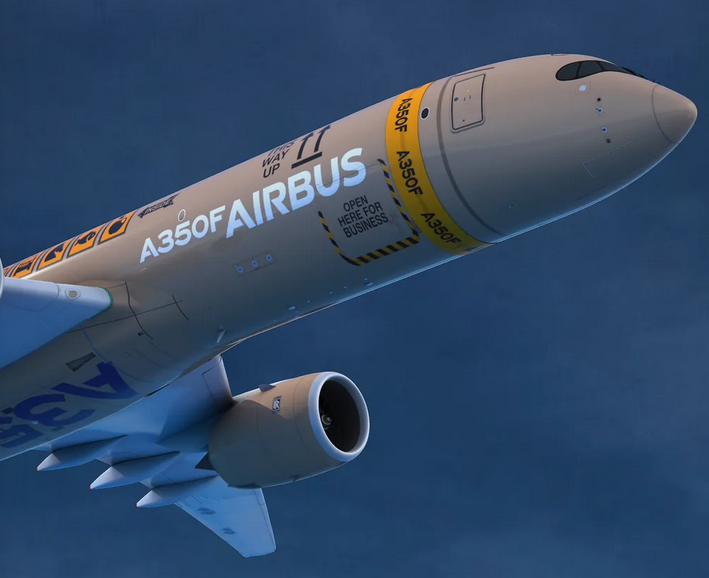
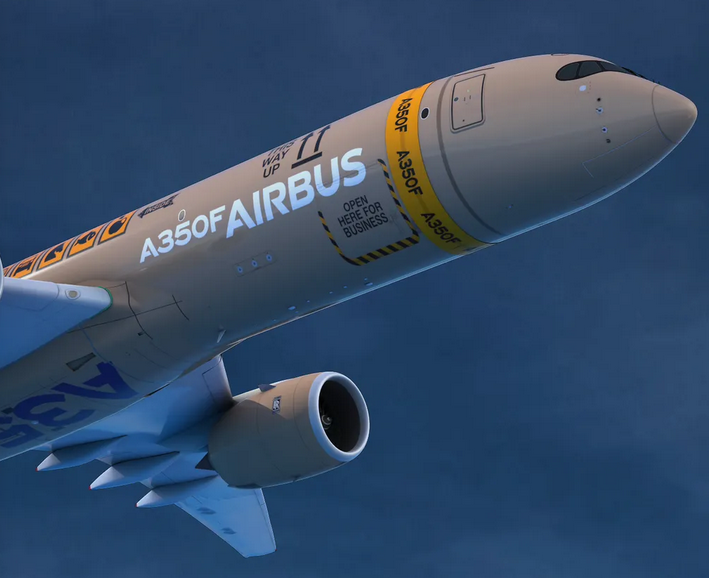
Rendering of the Airbus A350F. Assembly of the first two airplanes is underway. First flight is expected next year, and the entry-into-service goal is the 2H2027. Credit: Airbus.
“I’ve spoken to both the chief engineer and the deputy program manager and the program manager about this recently because there are a lot of things in the rumor mill going around about this,” Hamilton said. “The answer is no, the basic structure there for the requirements that we’ve met is all still there. It’s the same as it was, and we are going toward that to meet the requirements from both the EASA and the FAA. So, as I stated, the EIS is in the second half of 2027 and remains so.”
Hamilton, who is no relation to this author, said that Airbus has worked with regulators since 2022 to understand the certification requirements.
He made his remarks at the Cargo Facts conference in Nashville (TN).
Engine reliability and durability
The A350F is based on the passenger A350-1000, the largest model of the family. Five sections have been removed. The freighter is powered by the same Rolls-Royce Trent XWB-97 as the -1000. Some carriers, notably in the Middle East, have complained about the on-wing time of the XWB-97, which has fallen well short of promises.
Middle Eastern airlines operate in a very tough, hot and sandy environment. Cathay Pacific Airways, operating in a highly salt-air environment, also reported shorter on-wing time, though not as short as the Middle Eastern airlines.
Hamilton said the engine’s reliability is excellent. “That’s over 99.9%. There are issues on the durability of the engine and the on-wing time. Rolls-Royce have been working really hard on this. They are at a stage where they can now say they will get that durability up to a level that will be very much along where the market is at the moment for the Middle East.”
Related
source