


Subscription Required
By Scott Hamilton, Bjorn Fehrm and Charlie Alcock
June 4, 2026, © Leeham News: When the world plunged into economic lockdown as the COVID-19 pandemic emerged in March 2020, hundreds or thousands of companies turned to governments for financial aid.
Boeing, already reeling because of the 737 MAX grounding a year earlier, declined direct government assistance because issuing warrants was a prerequisite. Instead, the US Treasury purchased Boeing bonds to funnel money into corporate coffers, and the Defense Department began awarding a series of contracts to the company.
On the other side of the Atlantic, Airbus had no objections to direct largesse from the French government. Founded in 1970 with government subsidies and having grown through the decades with “reimbursable launch aid” for airplane program after airplane program, receiving hundreds of millions of Euros from the French government to help get through the new pandemic was just fine.
There was a catch, however. Airbus had to up its game and commit to a new airplane powered by clean fuel. Airbus pledged to intensify its research in hydrogen as an alternate fuel to Jet A. Officials placed 2035 as its target to design, launch and put into service a hydrogen-powered airliner. The company showed three concepts: a propeller aircraft, a tube-and-wing mainline jet and a Blended Wing Body (BWB) aircraft, Figure 1.
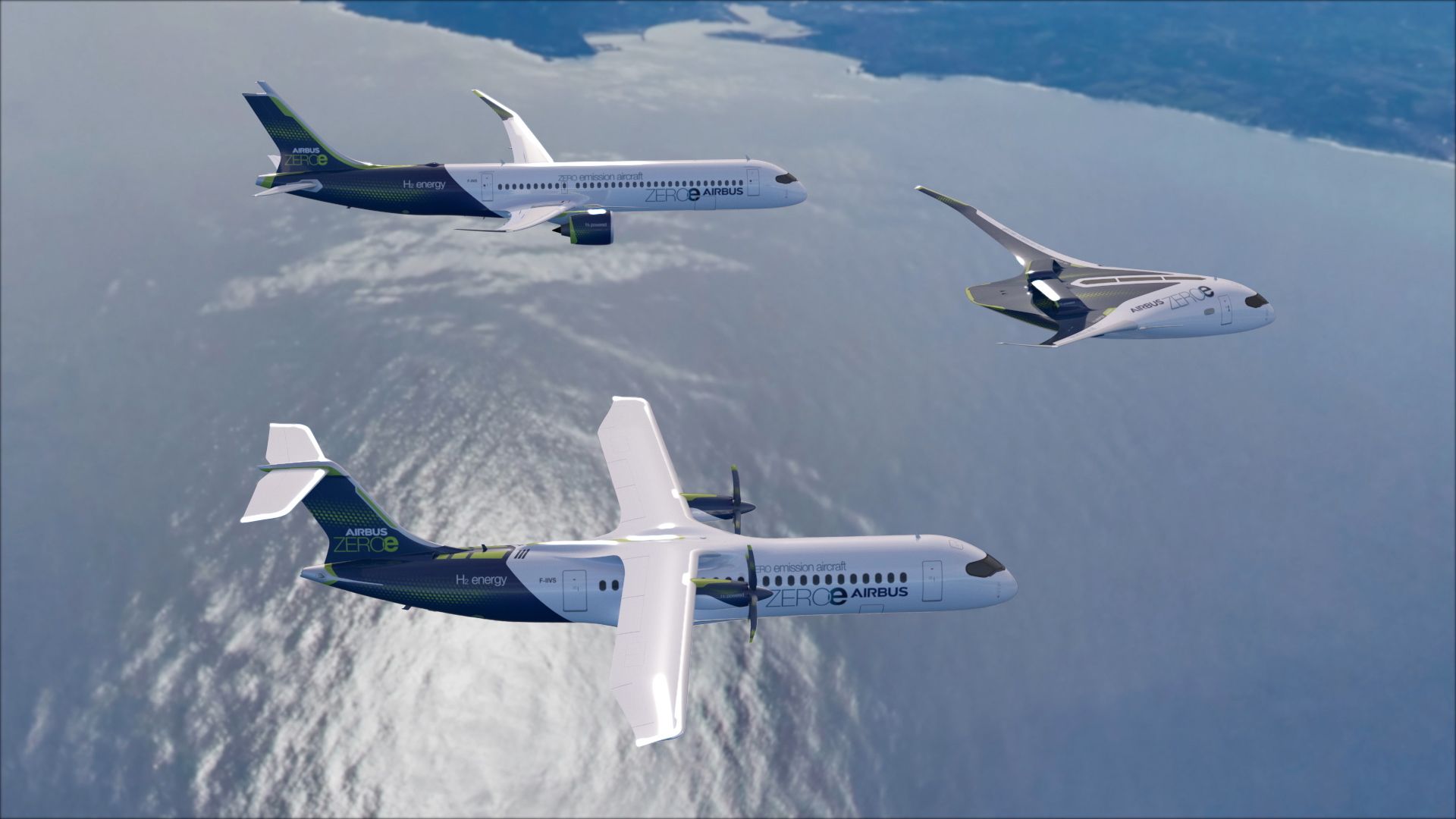
Figure 1. The three ZEROe concept aircraft as presented in September 2020. Source: Airbus.
Many considered the focus on hydrogen to be pie-in-the-sky thinking. Even some within Airbus scoffed at the idea. In 2024, LNA was told by an Airbus insider that the OEM would drop the 2035 target and the H2 effort in another two years. In fact, Airbus pulled back in 2025.
However, ATR, in which Airbus owns 50%, committed in February to a hybrid-electric-powered turboprop airliner by 2029.
The question is: how does all this fit into the work on the Airbus Next New Airplane?