


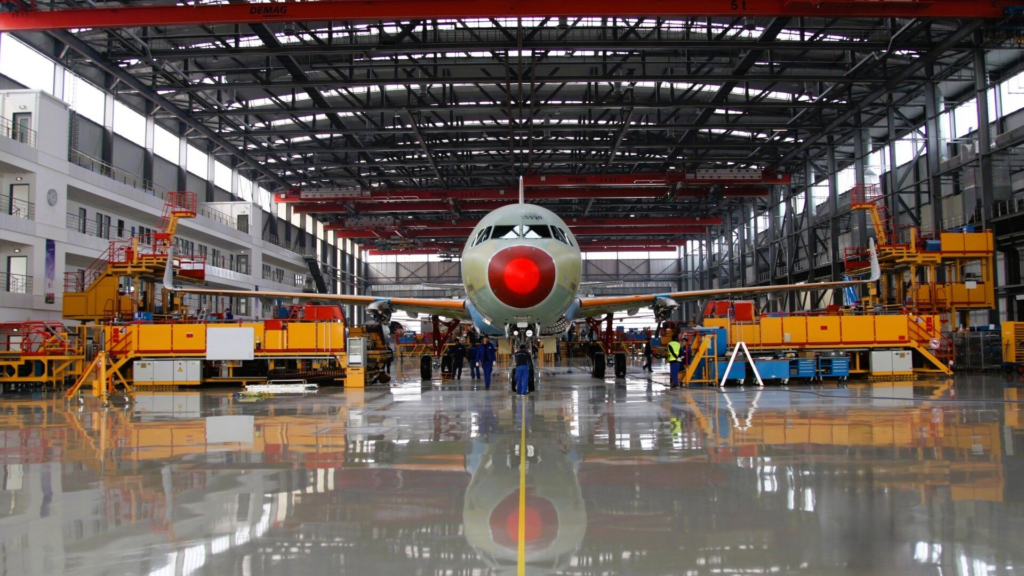
October is a big month for Airbus, as it is set to have back-to-back inaugurations of new final assembly lines (FALs) in the US and China. Both will be used to boost production of Airbus A320neo family aircraft, and will be crucial to the manufacturer achieving its goal of producing 75 units per month by 2027.
Airbus will start by opening a second A320 FAL at its site in Mobile, Alabama, on October 13, doubling production capacity for its A320 family customers in North America. Just a few days later, it will also be opening a second FAL at its site in Tianjin, China, which is its single largest country for orders. The latter launch date is particularly important to Airbus as it is currently negotiating a reported 500-aircraft order with Chinese airlines.
Airbus’ Ambitious Production Goals


Airbus has a backlog of over 7,000 A320 family aircraft, which is more than 12 years of production when you consider that its monthly deliveries have averaged 48 over the course of 2025. That’s a long line to wait in for new customers, so Airbus is heavily incentivized to increase production rates in order to keep its sales pipeline ticking over. During its mid-year financial guidance last year, it stated that it “continues to ramp up towards a rate of 75 A320 family aircraft per month, which is now expected to be reached in 2027.”
While Airbus is making incremental gains at its European plants, this 50% increase in production capacity is predicated on it doubling the production rates at its FALs in Mobile and Tianjin. But it is also having to tread a fine line politically. Since Airbus first announced its overseas expansion plans a few years ago, the US and China have plunged into an extended trade war, leaving the manufacturer anxious to avoid offending either trade power.
Until recently, Airbus had said that the second Tianjin line would only open at the end of the year. But with the US line set to open in two weeks, the inauguration of the new Chinese line has been moved up to happen the week after, highlighting efforts to achieve a balanced approach towards Airbus’ two largest narrowbody markets. Guillaume Faury, Airbus CEO, has been keen to emphasize that the new assembly lines in both countries are vital to Airbus and the industry at large, stating:
“By 2026, Airbus will have ten A320 family final assembly lines around the world, with the US and China each accounting for 20 percent of the company’s global production capacity. This ramp-up will benefit the entire aerospace industry’s global value chain.”
The Four A320 Family FALs
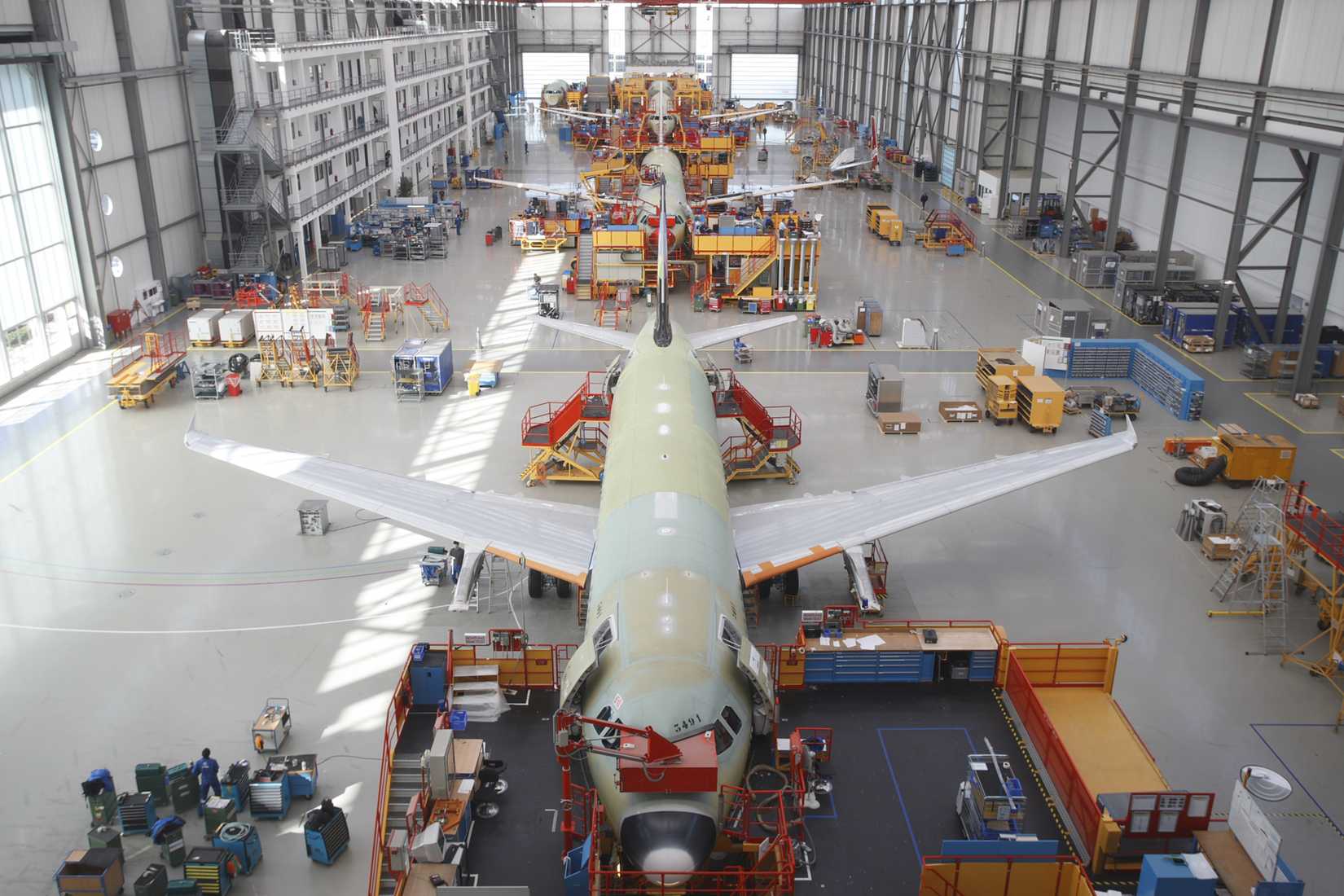
More than three quarters of A320 family aircraft are currently produced in Europe. This includes the A320’s original birthplace of Toulouse, which has 2 FALs for A320 family production, and the much larger facility at Hamburg Finkenwerder. The latter has four FALs, and accounts for about half of the variant’s production, including being the facility responsible for producing the long-range A321XLR variant.
|
Airbus’ Four A320 Family Production Sites |
||||
|
Location |
2025 FALs |
2025 Monthly Avg. |
2027 FALs |
2027 Monthly Avg. |
|
Hamburg, Germany |
4 |
25 |
4 |
30 |
|
Mobile, US |
1 |
5 |
2 |
15 |
|
Tianjin, China |
1 |
6 |
2 |
15 |
|
Toulouse, France |
2 |
12 |
2 |
15 |
|
Total |
8 |
48 |
10 |
75 |
To date, Mobile and Tianjin have had a single FAL producing single digit frames each month. But with the opening of second lines at each facility, Airbus intends to scale both to produce 15 aircraft a month, in line with Toulouse’s twin FALs.
It is worth noting that Airbus is also conducting extensive modernization and enhancements to existing FALs, such as the expansion of digital production control, automation of logistics, and the introduction of light robots. So, in addition to the new FALs, the existing lines at all four sites will be capable of greater throughput as well.
What About Airbus Operations In India?


Airbus opened the production line in Tianjin in 2008 to serve its fastest-growing market. Mobile followed a decade ago, as the manufacturer chose to place FALs within its highest-demand markets. But another huge market for Airbus is India, where IndiGo and Air India currently have more than 1,200 outstanding orders for A320 family aircraft, about 17% of the total backlog.
Understandably, India has been calling for Airbus to set up an in-country FAL to match these massive orders. Thus far, Airbus has resisted, saying that it would overstretch its global supply chains. Instead, it is currently focusing on key investment projects in India, emphasizing partnerships with local enterprises. These include:
- C295 Final Assembly Line: Airbus Defense & Space, in partnership with Tata Advanced Systems, has inaugurated a facility in Vadodara to assemble 40 aircraft as part of an order for 56 C295 military transports for the Indian Air Force. The assembly will include manufacture of detail parts, tooling, sub-assemblies, and major component assemblies, with Indian suppliers being brought in across the value chain. The first aircraft is expected to roll out in September next year.
- H125 Final Assembly Line: Airbus Helicopters and Tata Advanced Systems are setting up an FAL for the H125 civil helicopter in India, the country’s first private sector helicopter. The facility will perform major component integration, avionics and mission systems installation, and testing, The FAL will also cater for exports to neighboring countries, with first deliveries to commence next year.
In addition, Airbus is also deepening its partnerships with Indian component and structure manufacturers as suppliers. For example, Mahindra Aerostructures is contracted to build the main fuselage and structural assemblies for the H130 and H125 helicopters. Tata and Mahindra are also increasingly manufacturing metallic detail parts, components and assemblies for Airbus’s commercial aircraft programs.
source