


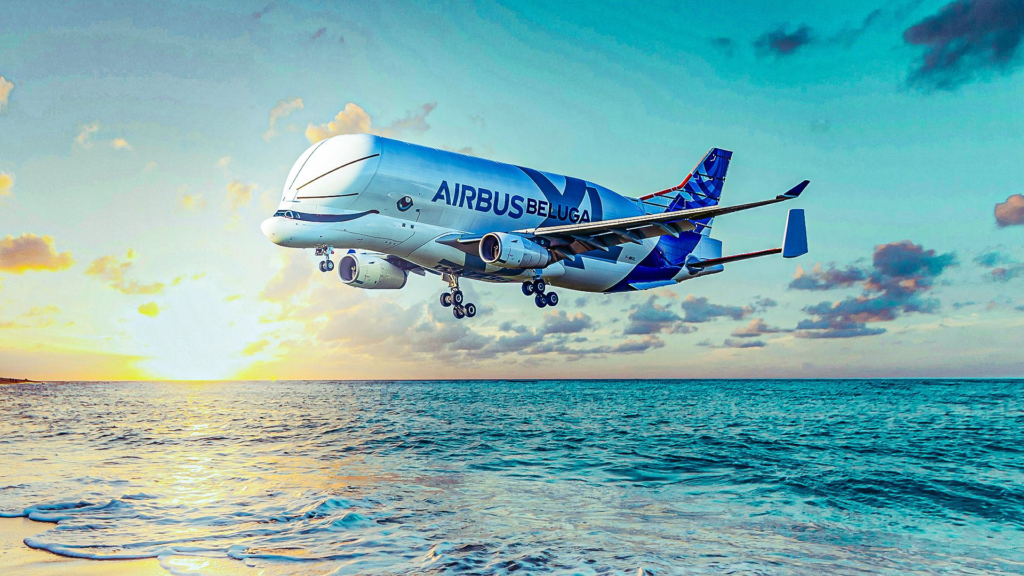
The Airbus BelugaXL serves as the manufacturer’s outsized cargo lifter, a model designed to shuttle massive aerostructures, including large Airbus A350 fuselage sections, full aircraft tailplanes, and even a pair of A350 wings that can fit inside the aircraft. Originally derived from the Airbus A330-200, the aircraft offered exceptional volume and payload capabilities over the original BelugaST model, offering an internal cargo hold space exceeding 2,200 cubic meters (78,000 cubic feet). This included up to 51 tonnes of payload and a range of roughly 2,200 nautical miles. A fleet of six aircraft, all operated by Airbus Transport International, entered service, with the sixth and final airframe joining in June 2024. This gives Airbus a standardized, higher-throughput production line that helps de-risk schedules and reduce large-scale logistical bottlenecks.
When compared with the original BelugaST, the XL’s wider overall fuselage and systems enable around 30% more payload and the ability to carry larger single aircraft pieces, ultimately cutting down break-down and re-assembly time. In practical terms, this means aircraft can take fewer trips and offer more predictable final assembly, especially important for the Airbus A350 and the Airbus A320neo. While the Boeing Dreamlifter can lift heavier point loads, the BelugaXL’s greater internal volume is better optimized for Airbus parts, making it a capable purpose-built freighter rather than a general-purpose cargo aircraft.
A Brief Overview Of The Original BelugaST

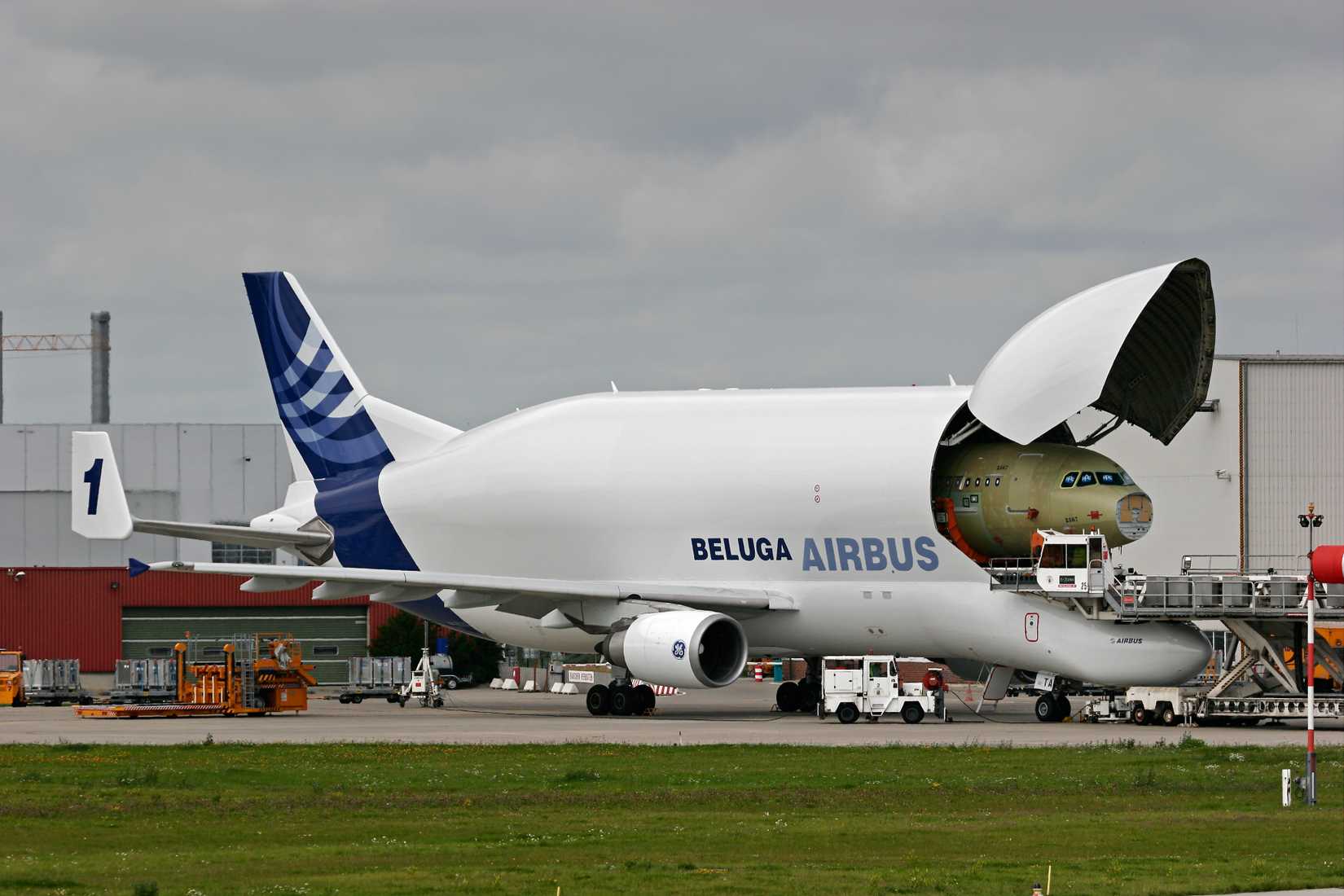
The original BelugaST, an aircraft formerly known as the Airbus A300-600ST, was developed in the 1990s to move Airbus’s oversized parts, including wings, fuselage sections, and tailplanes, between a handful of dispersed European sites. These aircraft replaced aging Super Guppies. An aircraft originally based on the earlier Airbus A300, the jet features a cavernous upper fuselage with a forward cargo door and cockpit set low to allow unobstructed loading capabilities.
Five of these aircraft entered service starting in 1995, and Airbus Transport International operates them. Typical capabilities for this kind of aircraft include a maximum payload of around 47 tons and practical carriage of items up to around 30 meters. This included an outsized hold cross-section measuring approximately 23.3 feet (7.1 meters) across and 22 feet (6.7 meters) high. It also features a usable length of around 123 feet (37.7 meters). The jet’s range is around 900 nautical miles at its maximum load.
The BelugaST enabled Airbus to industrialize large subassembly flows long before the BelugaXL arrived, eventually cutting teardown and assembly time and the number of trips. After the BelugaXL began taking over internal shuttles between facilities, the manufacturer began to use the BelugaST for dedicated outsized cargo charters through Airbus Beluga Transport in 2022. It used marketing advantages, such as moving helicopters without disassembly. This stand-alone operation was ultimately wound down in early 2025.
An Overview Of The BelugaXL And The Capabilities It Brings To The Table

The BelugaXL is Airbus’ next-generation outsized airlifter, a plane that has been purpose-built to shuttle massive aircraft sections between eleven different European plants. The aircraft offers impressive payload, volume, and turnaround speeds compared to the older, fundamentally less capable BelugaST. Originally derived from the Airbus A330-200, the plane keeps its cockpit lowered and allows for a giant swing-open nose door to make it easier for loading crews to roll in without disturbing flight-deck systems. A reinforced, enlarged upper fuselage, alongside a modified tail and integrated handling gear, enables signature missions.
As previously mentioned, the aircraft has the impressive ability to transport a pair of Airbus A380 wings. Each of the six in-service hauls more than 51 tons over approximately 2,200 nautical miles, delivering more than 30% greater transportation capability. This program was originally launched in 2014, and the aircraft in question took to the skies in 2018 before entering service in 2020. The aircraft was completed in June 2024, when the final airframe was delivered to Airbus Transport International. Here are some specifications for the BelugaXL, according to Airbus.
|
Category: |
Airbus BelugaXL Specification: |
|---|---|
|
Capacity: |
50,500 kg (111,333 lbs) |
|
Length: |
207 feet (63 meters) |
|
Maximum takeoff weight (MTOW): |
227,000 kg (281,089 lbs) |
The aircraft was originally built with purpose-built loading docks, and it aims to target 70-minute aircraft turns. Common Airbus A330 systems simplify overall maintenance and training. The fleet also flies on growing blends of sustainable aviation fuel, cutting internal logistics emissions as volumes continue to rise. The net effect is an increased concentration of outsized lifting capabilities into a single, larger, highly standardized aircraft type. The manufacturer reduces overall teardown times, thereby reducing the risk of supply-chain bottlenecks. This allows the company to preserve schedule resilience as single-aisle aircraft output begins to climb.
What Are The BelugaXL’s Unique Features?

The Airbus BelugaXL’s uniqueness comes from the purpose-built design choices that effectively turned the Airbus A330-200 into a fast and repeatable flying factory link. A lowered cockpit frees the entire nose to hinge open, allowing outsized loads to roll straight into a vast, reinforced upper fuselage without disturbing core flight-deck systems. This allowed the manufacturer to standardize aircraft turns at dedicated loading stations.
The aircraft provides more than 30% additional capacity compared to the original Beluga, and it can carry a pair of 30-meter Airbus A350 wings at once. Each of these six aircraft offers exceptional range and capabilities, allowing it to serve the eleven European sites in the Airbus network as the manufacturer continues to ramp up capacity. 70-minute turnarounds make the aircraft incredibly capable, and common Airbus A330 systems simplify overall training and maintenance for Airbus Transport International, which operates this unique fleet as an in-house cargo airline. Core features of the Beluga XL include the aircraft’s enlarged crown, strengthened floor, and modified cabin, which allow it to fly easily despite its bulk.
The aircraft routinely uses Sustainable Aviation Fuel (SAF) blends that reduce emissions as flying hours begin to rise. Compared with competitors designed for different missions, such as Boeing’s Dreamlifter, the Beluga’s front-loading and wider cross-section allow it to transport complete aircraft sections. This minimizes necessary disassembly and re-rig times across the board. In net, this offers a highly specialized platform with high-cadence outsized lifting capabilities that shorten the airline’s overall production cycle.
What Competitive Advantage Does The Aircraft Offer Airbus?

Shutterstock
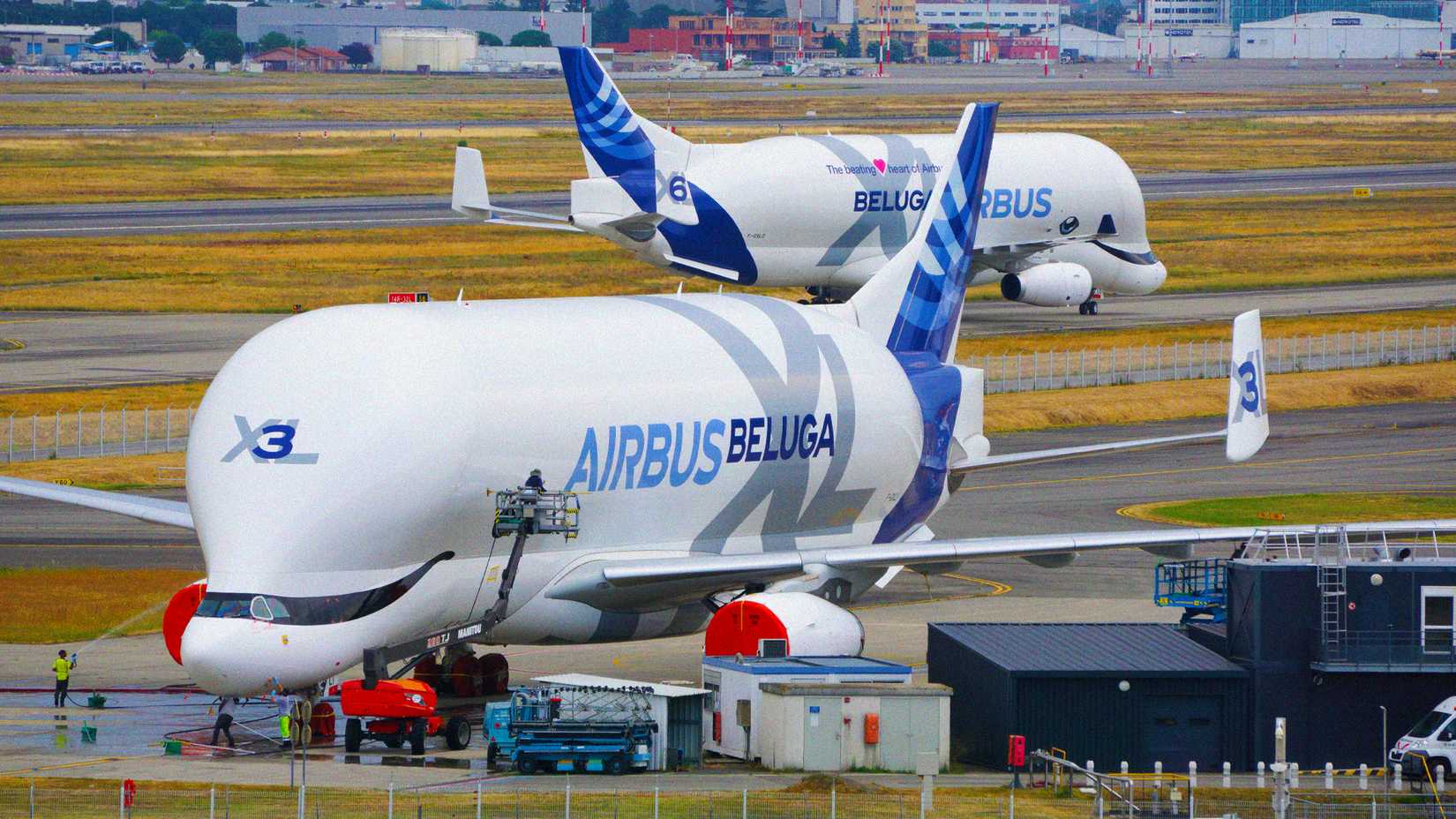
The BelugaXL gives Airbus a structural manufacturing edge. By flying complete sections, including a pair of A350 wings, alongside other components like barrels and horizontal tails, the aircraft shortens overall flow time and reduces labor and rework risks while protecting final assembly speeds. A lower cockpit and a swing-open nose are advanced features that enable front-loading at dedicated docks across 11 European sites, enabling fast, repeatable turns.
Originally built on the Airbus A330, the plane leverages existing engines, systems, and pilot pools, keeping operating and training costs low across the board. The jet offers around 30% more capacity than the Beluga’s older variant. The XL reduces overall dependence on scarce and expensive outsized charters. This improves overall resilience to manufacturing strikes, weather incidents, or geopolitical shocks.
This in-house flying conveyor belt maintains a higher production cadence on the Airbus A320neo and A321neo, preserving overall delivery schedules that drive cash flow. These benefits all make it easier for the airline to achieve its principal production objectives.
What Kind Of Training Is Required To Fly The BelugaXL?

Airbus BelugaXL crews require type-specific training, and all who fly the jet must be effectively trained on the A330 before they even begin their advanced training to use the model. Pilots must first hold a European Union Aviation Safety Agency (EASA) type rating. This is often found through Airbus’ cross-crew qualifications if they already fly Airbus A320 and Airbus A330 models. After being hired by Airbus Transport International, pilots will complete a BelugaXL course covering the lowered cockpit and swing-nose door architecture, as well as unique systems for environmental and hydraulic control.
Continued performance and handling alongside an enlarged upper fuselage, including detailed weight-and-balance measures for outside loads. Overall, training includes ground school, full-flight simulator sessions, and line flying under the continued supervision of those across the network’s specialized loading stations.
Aircraft crews also certify on special-cargo and dangerous-goods procedures, including low-visibility operations. Recurrent checks and periodic simulator refreshes will follow for all pilots. Pilots coming from older models will need to attain new certifications before flying the BelugaXL.
What Are Our Key Takeaways?

The Airbus BelugaXL, which was originally derived from the Airbus A330-200, is a purpose-built long-haul cargo aircraft designed primarily to shuttle sections of Airbus A350 and Airbus A320neo models. The aircraft’s range of 2,200 nautical miles allows it to transport cargo between most of the manufacturer’s major sites.
The aircraft features an internal hold exceeding a volume of 2,200 cubic meters, making it one of the strongest and most versatile freighter aircraft ever developed. The aircraft’s unique engineering makes it exceptionally well-suited to the relatively niche role that Airbus is looking for it to serve.
Six of these aircraft are in service, with the last model joining the fleet as recently as June 2024. With a lowered cockpit and a swing-open nose, the aircraft standardizes front loading across 11 different European sites, delivering more than 30% additional capacity while reducing teardown and overall schedule risk.
source