


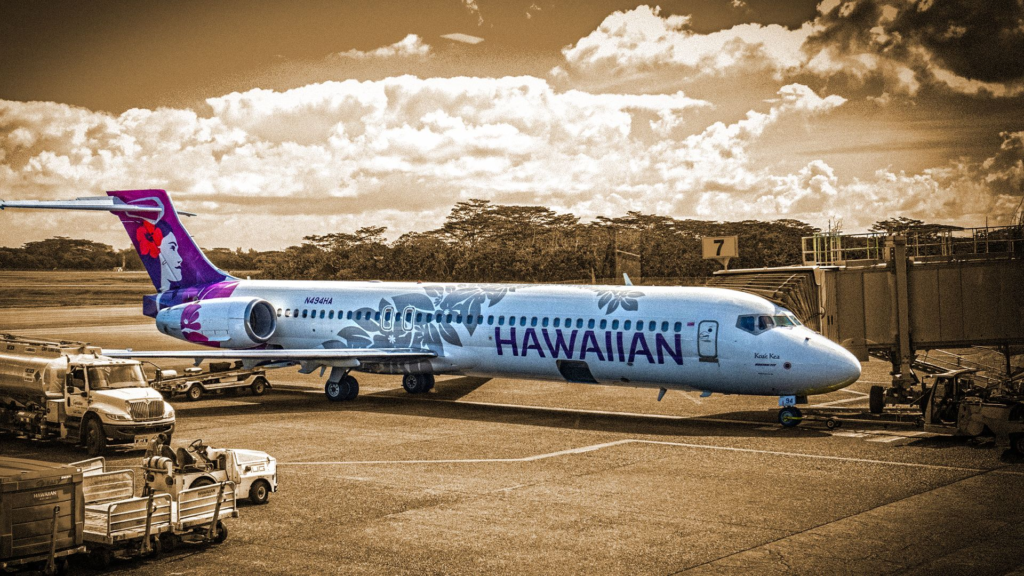
Hawaiian Airlines was founded in 1929 and is the state of Hawaii’s largest and longest-serving airline. Based at Honolulu Daniel K. Inouye International Airport (HNL), the carrier connects the islands with the US mainland, Asia, and the South Pacific.
In this article, we will take a closer look at Hawaiian Airlines’ aging fleet of Boeing 717s and two aircraft the carrier may use to replace them: the Airbus A220 and the Embraer E195-E2. We will also consider the routes on which Hawaiian Airlines may deploy each aircraft.
Hawaiian Airlines & The Boeing 717

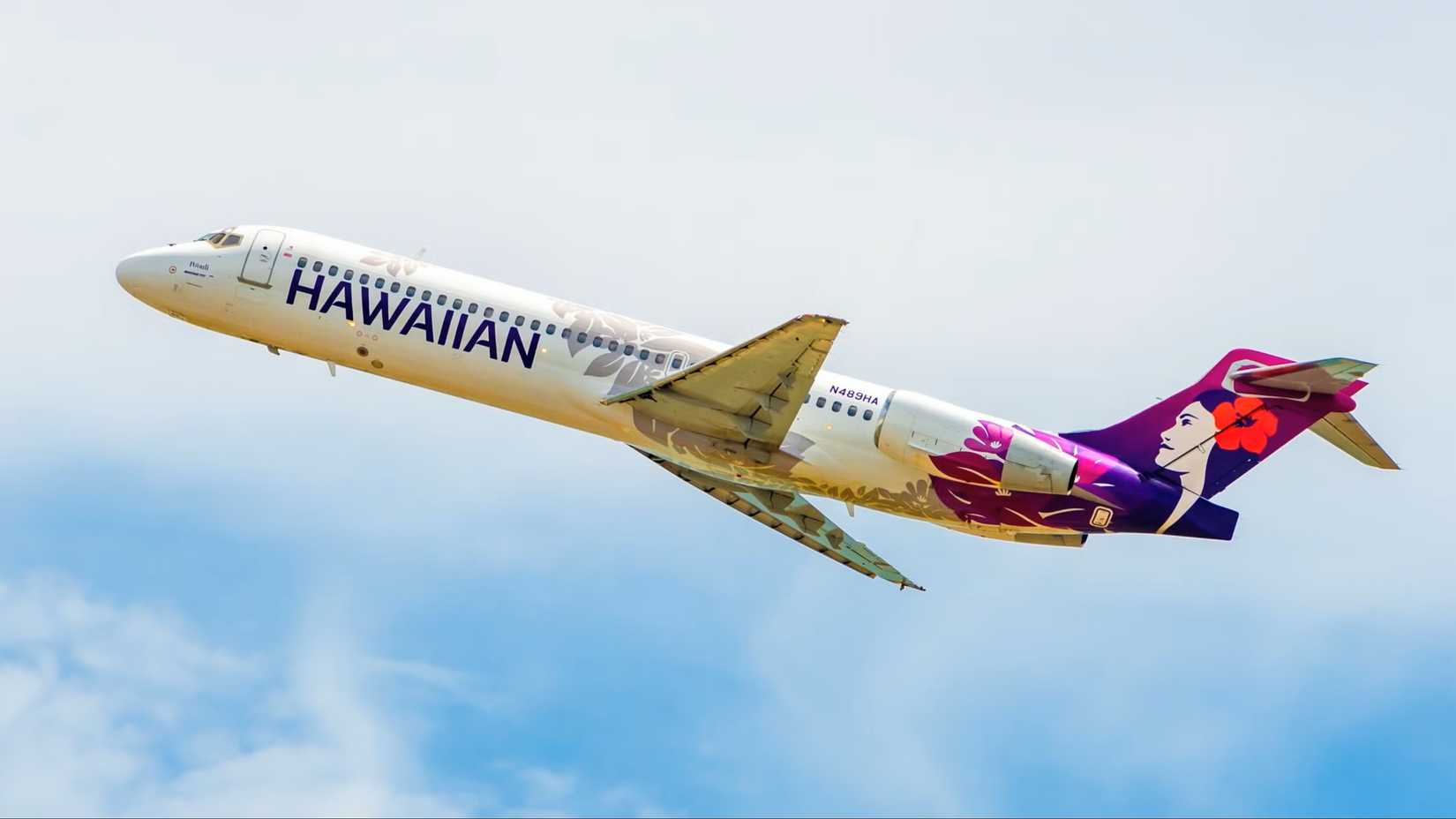
Hawaiian Airlines is the world’s second-largest operator of the Boeing 717, with a total of 19 in its fleet. This puts it behind 

Each of Hawaiian Airlines’ Boeing 717s can accommodate up to a maximum of 128 passengers in a two-class configuration – eight in first class and 120 in economy class. This makes the 717 the smallest aircraft in the carrier’s fleet, well behind the Boeing 787-9, which can carry up to 300 passengers – 34 in first class and 266 in economy class, including 79 in extra-legroom seats. The latest data from ch-aviation shows that Hawaiian Airlines’ fleet is currently made up of the following aircraft:
|
Aircraft |
Number In Fleet |
Number On Order |
|---|---|---|
|
Airbus A321neo |
18 |
– |
|
Airbus A330-200 |
24 |
– |
|
Boeing 717 |
19 |
– |
|
Boeing 787-9 |
4 |
– |
|
Total |
65 |
– |
Two aircraft ideally placed to replace Hawaiian Airlines’ fleet of Boeing 717s are the Airbus A220 and the Embraer E195-E2, each offering a similar passenger capacity and operational capabilities. Let’s take a closer look.
Airbus A220


Designed for efficiency, comfort, and performance, the Airbus A220 has quickly become one of the most talked-about aircraft in modern commercial aviation, bridging the gap perfectly between regional aircraft and larger single-aisle models like the A320neo. Originally developed by Bombardier as the C Series, the A220 was rebranded after Airbus took a majority stake in the program in 2018. The A220 first entered commercial service in July 2016, when SWISS operated the aircraft’s inaugural flight from Zurich Airport (ZRH) to 
One of the most noticeable features of the Airbus A220 is its spacious cabin thanks to its five-abreast seating in a 2-3 configuration. Passengers enjoy wider seats, larger windows, and a brighter cabin than what’s typically found on regional jets. The windows are 50% larger than those on comparable aircraft, flooding the cabin with natural light and enhancing the sense of space, and its overhead lockers are larger than those found on the likes of the Boeing 717. The A220 is also set to soon be fitted with Airbus’ unique Airspace cabin, further enhancing its onboard experience.
From a performance standpoint, the Airbus A220 is just as impressive. Powered by Pratt & Whitney PW1500G geared turbofan engines, the aircraft delivers up to 25% lower fuel burn per seat than older-generation aircraft. This efficiency allows airlines to operate new point-to-point routes that were once uneconomical. For example, the A220-300, the larger of the two variants, offers a range of around 3,900 miles, which is easily enough for Hawaiian Airlines’ flights to destinations across the US West Coast, such as 
Embraer E195-E2


The Embraer E195-E2 is the largest and most advanced member of Embraer’s next-generation E-Jet family. Officially entering service in 2019 with Brazil’s Azul Linhas Aéreas, the E195-E2 was designed to deliver exceptional efficiency and comfort on short- to medium-haul routes. With new aerodynamics, advanced fly-by-wire technology, and Pratt & Whitney PW1900G geared turbofan engines, the E195-E2 also offers up to 25% lower fuel burn per seat compared to previous-generation aircraft, much like the Airbus A220.
The Embraer E195-E2 can seat up to 146 passengers, depending on configuration, making it ideal for airlines looking to bridge the gap between regional aircraft and larger single-aisle aircraft such as the Boeing 737 MAX 8 or Airbus A220-300. Inside, the cabin features Embraer’s popular 2-2 seating layout, ensuring that no passenger has a middle seat, while larger windows, improved overhead bins, and quieter engines all add to the sense of comfort and space. Operational flexibility is another major strength of the Embraer E195-E2, and the aircraft’s range of up to 2,900 miles makes it suitable for the majority of Hawaiian Airlines’ interisland routes and services to the US West Coast.
Which Aircraft Would Be Most Suitable For Hawaiian Airlines?
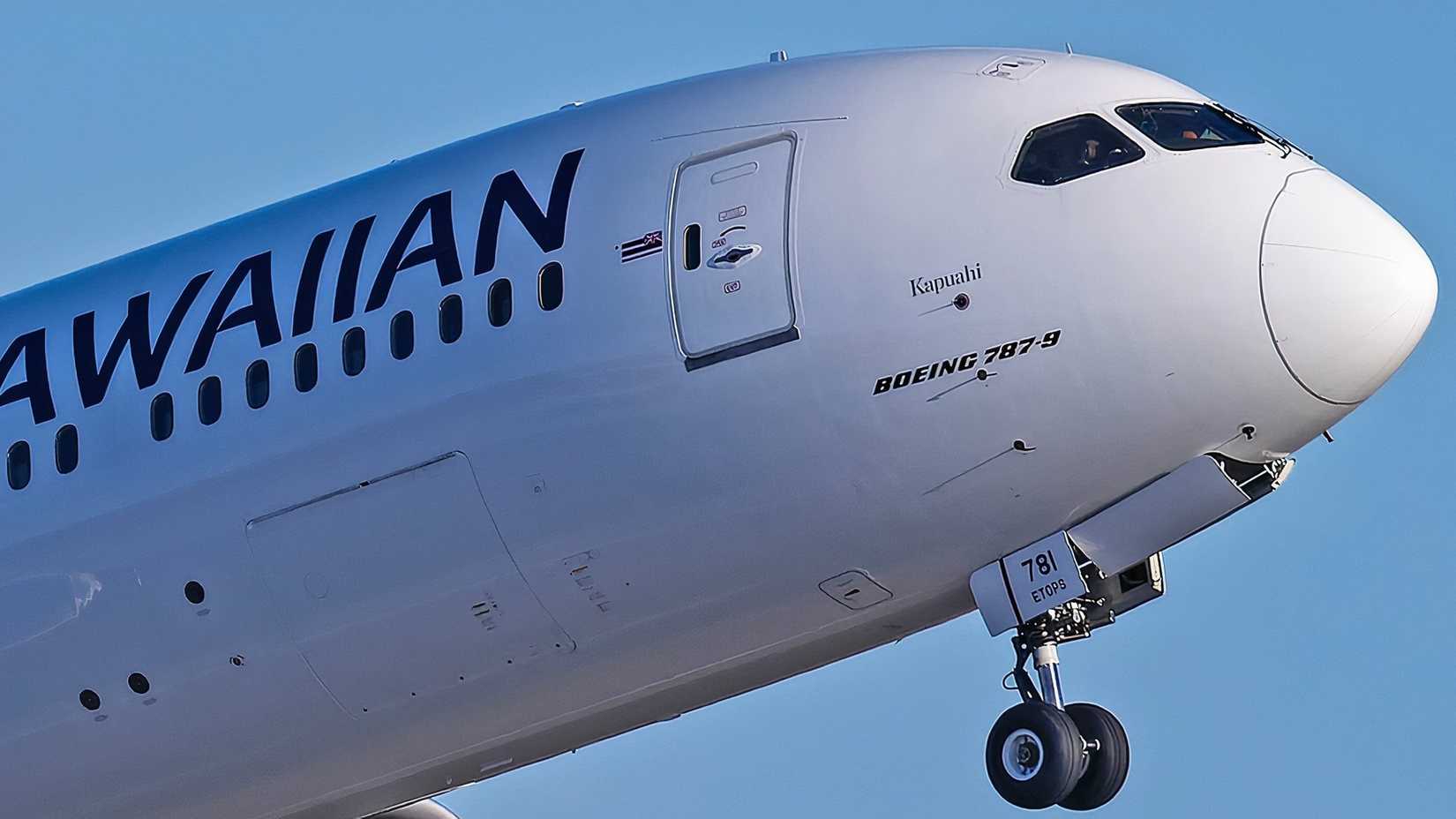
The Airbus A220 would be an excellent fit for Hawaiian Airlines, offering the perfect balance of efficiency, range, and passenger comfort. Its fuel-efficient Pratt & Whitney geared turbofan engines make it ideal for interisland and medium-haul routes across the Pacific, and its range of up to 3,900 miles would allow Hawaiian Airlines to serve secondary mainland cities more economically. Inside, the wide cabin, large windows, and quiet engines align with Hawaiian Airlines’ focus on a relaxing, premium onboard experience, further enhancing the carrier’s island-inspired service while lowering operating costs and environmental impact.
Meanwhile, the Embraer E195-E2 could be a strong alternative to the Airbus A220 for Hawaiian Airlines, particularly on interisland and short-haul routes. Its smaller capacity makes it well-suited for markets where the A220’s higher seat count might exceed demand. The E195-E2’s excellent fuel efficiency, powered by Pratt & Whitney PW1900G geared turbofan engines, also offers lower operating costs and reduced emissions, aligning with Hawaiian’s sustainability goals.
While the Airbus A220 has a greater range for longer flights to the US mainland, the Embraer E195-E2 excels in short, high-frequency operations typical of Hawaii’s network. The aircraft’s 2-2 seating layout provides every passenger with either a window or aisle seat, maintaining comfort on shorter journeys, and its quiet cabin and advanced systems would enhance the passenger experience while giving Hawaiian Airlines flexibility to optimize fleet utilization. Overall, the E195-E2 offers a right-sized, efficient option for the carrier’s regional and interisland operations.
About Hawaiian Airlines

Hawaiian Airlines was founded in 1929 as Inter-Island Airways, operating small amphibious aircraft between Oahu and the other islands. In 1941, it became Hawaiian Airlines, growing steadily to become Hawaii’s largest and longest-serving airline. Over the decades, it has expanded from short island hops to transpacific routes linking Hawaii with the US mainland, Asia, and the South Pacific, while at the same time maintaining its deep island roots.
Today, Hawaiian Airlines’ fleet includes modern aircraft such as the Airbus A321neo and Boeing 787-9, offering quieter cabins, modern amenities, and distinctive Hawaiian design touches. Hawaiian Airlines went on to merge with Alaska Airlines in 2024 in a deal valued at about US $1.9 billion, combining their strengths in Hawaii and on the US West Coast. The two airlines will continue flying under separate brands, but they now benefit from access to the global network of the oneworld alliance, of which Hawaiian Airlines is set to officially become a member in spring 2026.
Daniel K. Inouye International Airport

Honolulu Daniel K. Inouye International Airport (HNL) is the main gateway to Hawaii and the state’s busiest airport, processing more than 21 million passengers in 2024. Located just a few miles from downtown Honolulu and Waikiki, it serves as the primary hub for Hawaiian Airlines and a major connection point for travelers arriving from the US mainland, Asia, and the South Pacific.
Opened in 1927 as John Rodgers Airport, it was renamed in 2017 to honor Senator Daniel K. Inouye, a decorated World War II veteran and long-serving US senator from Hawaii. Today, the airport combines modern facilities with the open-air design that makes it distinctly Hawaiian, and arriving passengers are often greeted by lush gardens and even koi ponds scattered throughout the terminals.
The airport has four runways, including the famous reef runway, one of the first major runways in the world built over water. The busiest domestic routes from Honolulu Daniel K. Inouye International Airport in 2024 were:
|
Ranking |
Destination |
Passengers |
Airline(s) |
|---|---|---|---|
|
1 |
Los Angeles International Airport (LAX) |
1,210,000 |
Alaska Airlines, American Airlines, Delta Air Lines, Hawaiian Airlines, Southwest Airlines, United Airlines |
|
2 |
Kahului Airport (OGG) |
1,009,000 |
Hawaiian Airlines, Southwest Airlines |
|
3 |
Lihue Airport (LIH) |
762,000 |
Hawaiian Airlines, Southwest Airlines |
|
4 |
Kona International Airport (KOA) |
719,000 |
Hawaiian Airlines, Southwest Airlines |
|
5 |
Hilo International Airport (ITO) |
654,000 |
Hawaiian Airlines, Southwest Airlines |
|
6 |
San Francisco International Airport (SFO) |
587,000 |
Alaska Airlines, Hawaiian Airlines, United Airlines |
|
7 |
Seattle-Tacoma International Airport (SEA) |
511,000 |
Alaska Airlines, Delta Air Lines, Hawaiian Airlines |
|
8 |
Las Vegas Harry Reid International Airport (LAS) |
346,000 |
Hawaiian Airlines, Southwest Airlines |
|
9 |
San Diego International Airport (SAN) |
290,000 |
Alaska Airlines, Hawaiian Airlines, Southwest Airlines |
|
10 |
Phoenix Sky Harbor International Airport (PHX) |
265,000 |
American Airlines, Hawaiian Airlines, Southwest Airlines |
With the Airbus A220, Hawaiian Airlines would be able to operate all of the above routes to both the US West Coast and throughout the state of Hawaii. Meanwhile, when it comes to international services, the most popular routes in 2024 are listed in the table below:
|
Ranking |
Destination |
Passengers |
Airline(s) |
|---|---|---|---|
|
1 |
Tokyo Haneda Airport (HND) |
825,000 |
All Nippon Airways, Delta Air Lines, Hawaiian Airlines, Japan Airlines |
|
2 |
Tokyo Narita Airport (NRT) |
760,000 |
All Nippon Airways, Hawaiian Airlines, Japan Airlines, Zipair Tokyo |
|
3 |
Seoul Incheon International Airport (ICN) |
423,000 |
Asiana Airlines, Hawaiian Airlines, Korean Air |
|
4 |
Sydney Airport (SYD) |
327,000 |
Hawaiian Airlines, Jetstar, Qantas |
|
5 |
Vancouver International Airport (YVR) |
320,000 |
Air Canada, WestJet |
source