


New Zealand’s Transport Accident Investigation Commission (TAIC) has concluded that an uncommanded engine shutdown suffered by an Air New Zealand A320neo last year was caused by a damaged component in the engine fire control panel.
TAIC’s interim report on the incident details a component defect within an overhead fire panel that inadvertently triggered an in-flight engine shutdown. The incident precipitated an order to inspect the global A320 fleet and replace any affected components within the next two years.
Air New Zealand A320neo Engine Shutdown

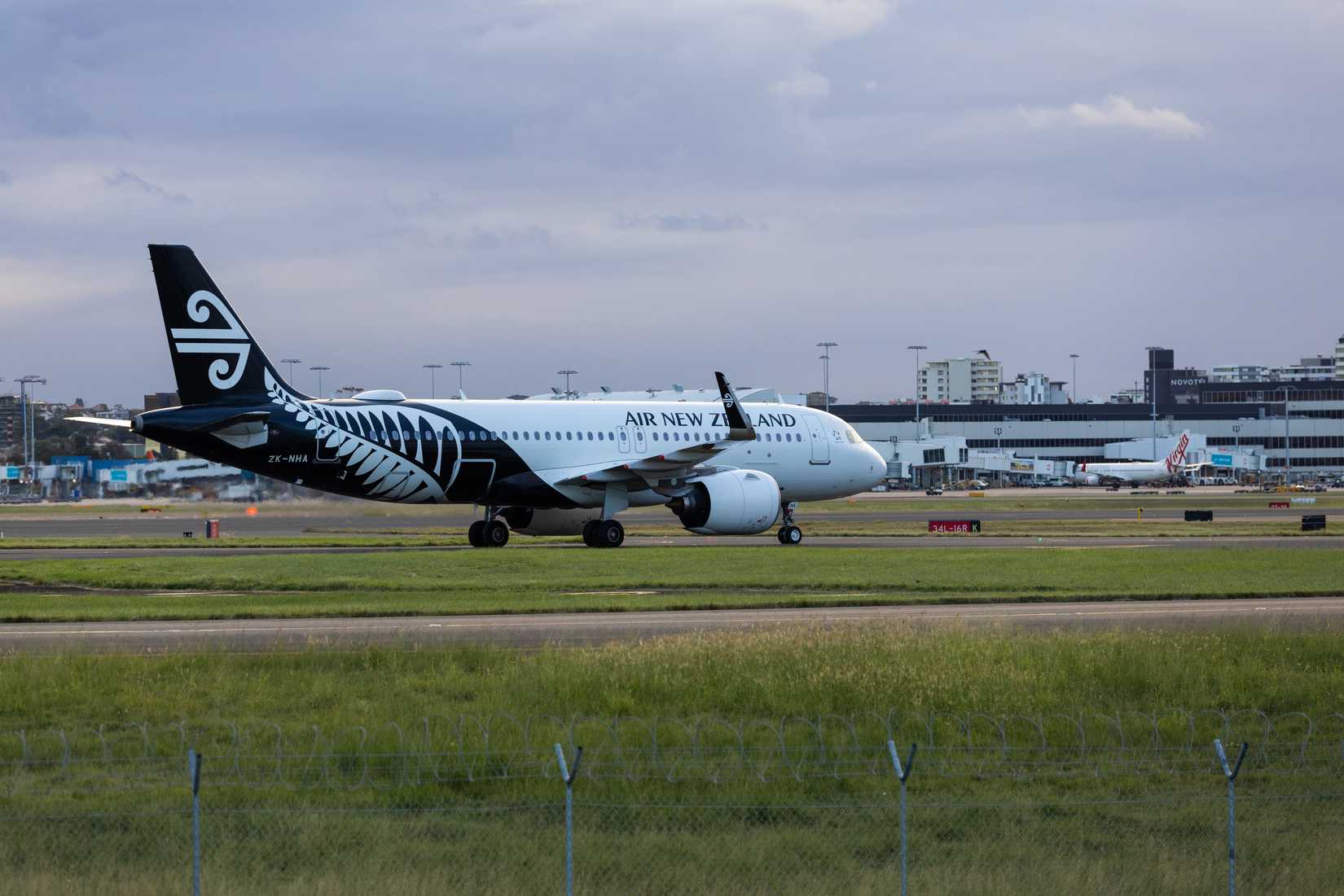
On December 1, 2024, an Air New Zealand Airbus A320neo was performing a passenger flight from Wellington to Sydney when one of its engines unexpectedly shut down over the Tasman Sea. The captain declared an emergency and diverted the aircraft to Auckland, landing safely with no injuries. TAIC’s investigation found that the shutdown occurred after an engine fire push button switch activated without pilot input due to a faulty overhead fire control panel.
|
Date |
1 December 2024 |
|
Flight code |
NZ249 |
|
Airline |
Air New Zealand |
|
Aircraft |
Airbus A320neo (ZK-NHA) |
|
Departure |
Wellington (WLG) |
|
Destination |
Sydney (SYD) |
|
Fate |
Diverted and landed safely in Auckland (AKL) |
A retaining pin inside the panel had been bent out of shape prior to installation, diminishing its capacity to lock the switch in place. Eventually, in-flight forces caused the switch to pop out on its own around 40 minutes into the flight, leading to a full engine shutdown. Once the plane had landed, airline engineers noticed that the fire push button was in the activated position, with both pilots confirming they had not touched the switch at any point. TAIC Chief Investigator of Accidents, Louise Cook, said,
“The switch is part of a panel above and behind the heads of the pilot and co-pilot; neither had touched the switch, and post-shutdown procedures didn’t tell them to check it.”
Fire Control Panel Damaged By Supplier

The aircraft involved in this incident is an Airbus A320neo registered as ZK-NHA, which was less than six years old at the time. The single-aisle jet is powered by two Pratt & Whitney PW1127GA-JM engines and entered service with Air New Zealand in February 2019. TAIC’s interim report found that the retention pin had been bent beyond acceptable thresholds after being mishandled by suppliers.
Following examination by French company Safran, which is the original equipment manufacturer (OEM) of the fire panel, external damage to the fire switch guard was immediately apparent, as well as deformation to the front panel. Engineers also found that the damaged retention pin had been bent by 2.73°, which is well above tolerance specifications of +/- 1°.
The panel itself was manufactured in 2015 and installed on a different Air New Zealand aircraft (ZK-OHK) until 2018, when it was removed to fix a faulty light. After its repair, it was then installed on ZK-NHA in 2020 and experienced no further issues until last year’s incident. In service bulletins issued last year, Safran identified a total of 108 fire panels to be removed from the global fleet for inspection.

5 Interesting Facts About Inflight Engine Shutdowns
A closer look at something that most of the flying public will never need to think about.
EASA Issues Airworthiness Directive

EASA recently issued an airworthiness directive requiring inspection of fire panels, which must be replaced within six months if damaged. TAIC’s report notes previous incidents involving an uncommanded fire switch activation, including a TAP Air Portugal incident from October 2023. In this case, Portugal’s accident investigator GPIAAF concluded that the fire control panel on the TAP A321neo had likely been dropped before its installation, damaging its retaining pin.
Just months before the Air New Zealand incident, a flynas A320neo experienced a similar problem, which was one of five other events of this kind caused by fire panel damage.
TAIC adds that the “full extent of the safety issue remains undetermined,” particularly as the same type of fire panel is used on all A320-family aircraft, while other Airbus aircraft use similar switches, including the Airbus A330, A340, A350 and A380 families of aircraft.
source