


I often compare the “big three” US carriers to one another in posts, as I find it interesting how the competitive dynamics have changed over time. In this post, I’d like to focus on Europe, and how I think one airline has really differentiated itself, at least when it comes to passenger experience.
I’ve often mentioned in passing how I think Air France has become Europe’s best airline. I’d like to take a bigger picture look at that, and especially reflect on just how much has changed in roughly a decade. The reason I’m bringing this up is because Lufthansa has just launched a new soft product, and claims that this will make it Europe’s best airline. If you ask me, overtaking Air France won’t be that easy, so let me explain why…
Air France’s current state & trajectory are impressive
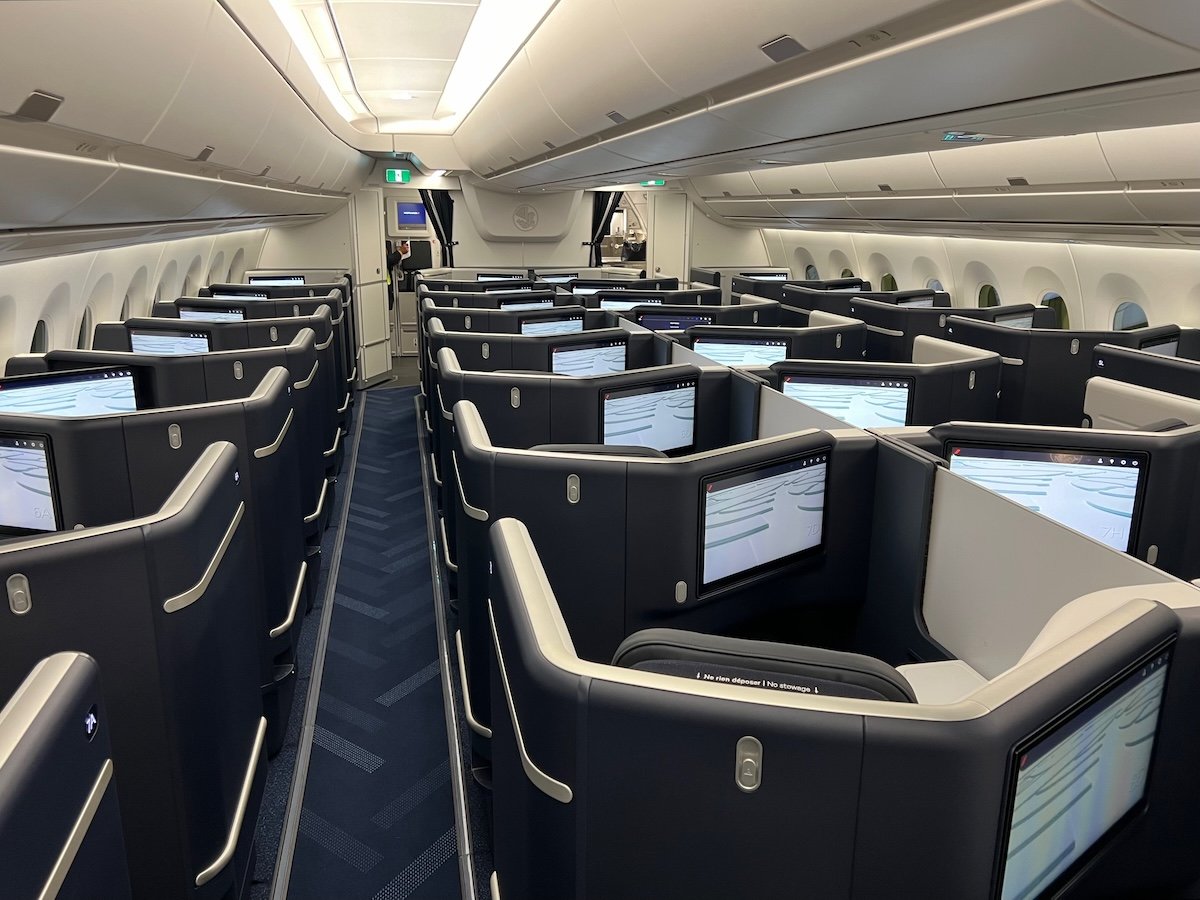
I just took a roundtrip flight to Europe in Air France business class, with both directions featuring the carrier’s new business class product. The experience was excellent, and what I also appreciate about Air France is how consistent the experience is. I don’t think I’ve ever gotten off an Air France flight disappointed, and I can’t say the same about some other European airlines.
As I took these flights, I couldn’t help but think back to a 2014 Air France media event I attended in New York, where the airline unveiled its new (at the time) first and business class.
Up until that point, I’d argue that Air France was almost behind its rivals in Europe — for example, Air France only introduced flat beds in business class well after Lufthansa and British Airways. What’s fascinating is how the dynamics have changed in the 12 years since then. Air France hasn’t just caught up with competitors, but I’d argue has surpassed them in a vast majority of ways.
I think the generally positive direction with passenger experience started in 2014 when those products were launched, but we’ve really seen the acceleration of positive change since 2018, with Ben Smith as Air France-KLM CEO, and Anne Rigail as Air France CEO. Though I’d argue that the third biggest contributor to Air France’s success might be Lufthansa Group CEO Carsten Spohr. 😉
Anyway, I digress. Let me share the areas where I think Air France is making it hard for other airlines to close the gap.
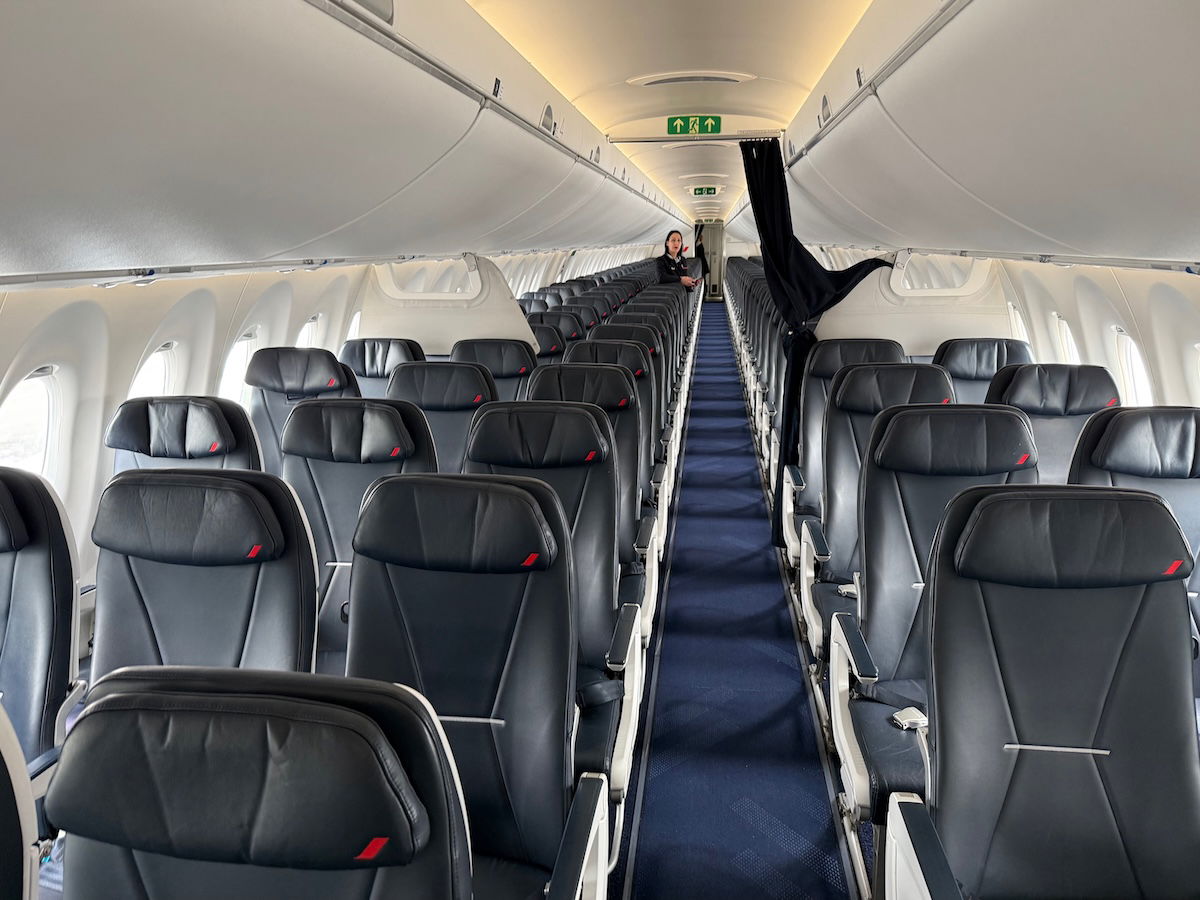
The best short haul experience across the board
It doesn’t matter what cabin you’re traveling in, Air France has the best short haul experience, on balance:

The best long haul first class experience
Even though not many people get to fly it, perhaps the product that Air France is most known for is its incredible La Premiere first class, and it creates quite the halo effect for the carrier. This product is just in a league of its own among European carriers, with what’s unarguably the world’s best first class ground experience, plus what’s arguably one of the world’s best first class onboard experiences (my updated rankings are coming soon, I just need to do the new SWISS Senses first class!).
Air France’s first class pricing has massively increased over the years, and it’s now the most consistently high priced first class product out there. While I don’t love that high pricing as a customer (obviously!), it’s a testament to Air France’s success, as the product is reportedly more profitable than ever before. It shows that if you go upmarket enough to differentiate yourself, people will pay a premium for it.

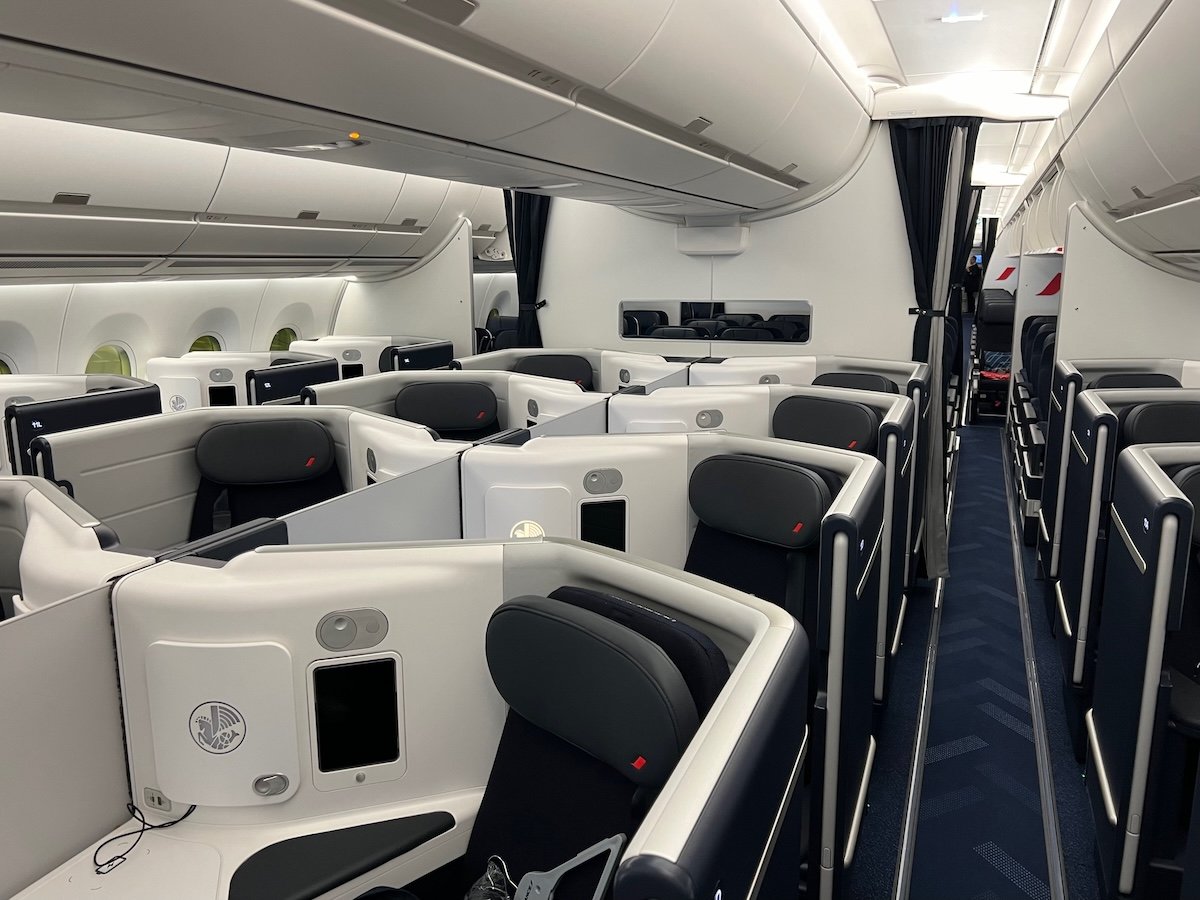
The best long haul business class experience
It’s hard to directly compare business class experiences between airlines, given how airlines almost always have several generations of seats in service. So I tend to think you judge an airline based on where they currently are, and where they might realistically be within the next year or two.
If you ask me, on balance, I’d say Air France has Europe’s best long haul business class product:
- A large majority of Lufthansa’s long haul planes are still in the 2-2-2 pre-Allegris configuration in business class, so that’s still highly uncompetitive
- British Airways has done a good job installing its new Club Suites business class, but at this point those seats are a generation behind in terms of technology (wireless and USB-C charging, bluetooth audio, entertainment screen quality, etc.)
- Air France has been taking delivery of new aircraft and retrofitting existing aircraft with latest generation reverse herringbone seats; remaining planes have previous generation reverse herringbone seats or staggered seats, and only a small number of A330s don’t have direct aisle access from all seats
While people could make a case for British Airways currently having a slightly more consistent hard product, I think the current A380 situation throws a big wrench in that, given the routes those planes fly. Let me put it this way — if I could only fly business class on one of the “big three” European carriers for the next five years, Air France would absolutely be my choice.
No strikes and good labor relations
Europe is known for its strong unions, and in the transportation sector, that tends to lead to a lot of strikes. Labor relations at Air France are as good as they’ve ever been. When’s the last time we saw industrial action at the airline that had huge impacts on passengers? Well, I don’t remember.
That’s quite a contrast to Lufthansa, where strikes are constantly on the horizon. That’s also partly because Lufthansa Group keeps setting up new subsidiaries in order to reduce labor costs. But I’d argue that operational reliability and not constantly having to worry about strikes is a very important factor that shouldn’t be overlooked.

Europe’s fastest Starlink Wi-Fi rollout
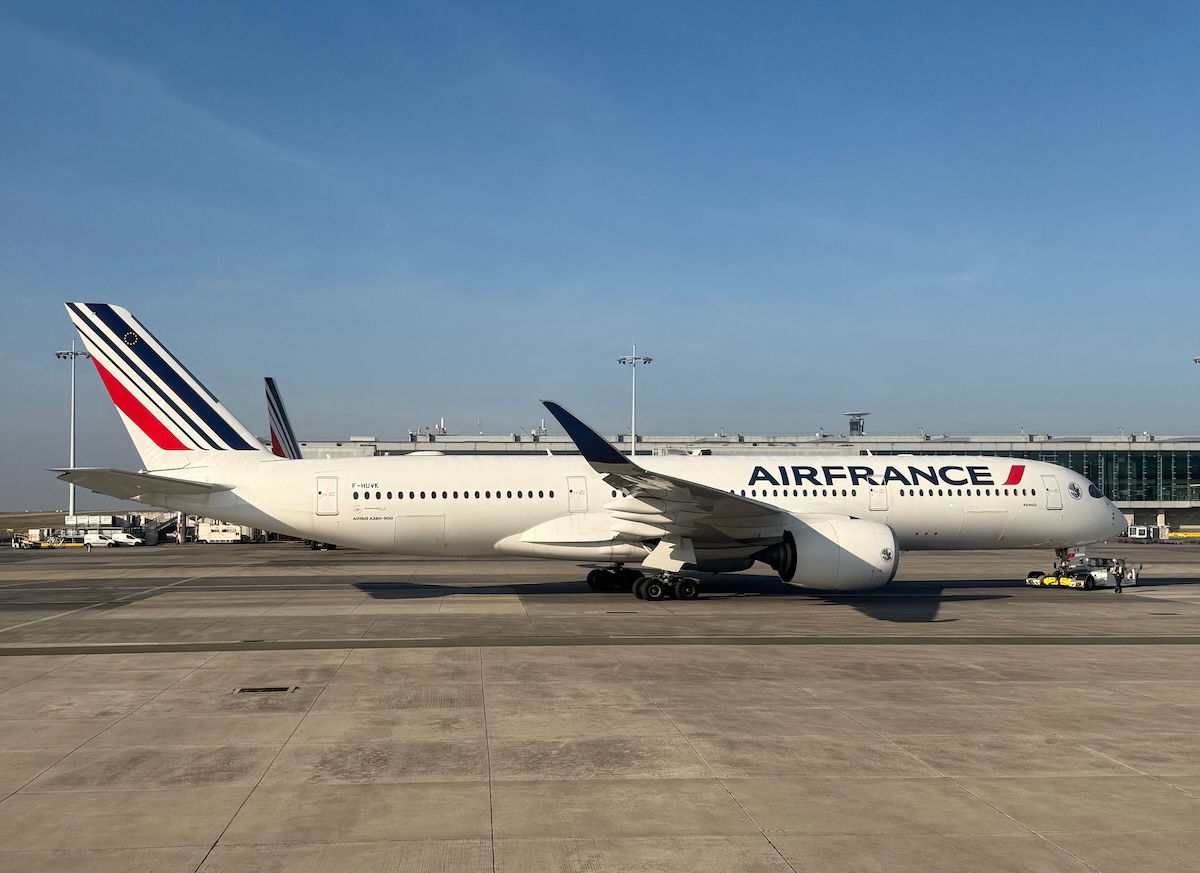
Air France was the first major global carrier in Europe to sign up for Starlink Wi-Fi, and the airline is also the furthest along with installing it. Air France expects to have the entire fleet with Starlink by the end of 2026. While I imagine that could slip somewhat, this is a way faster timeline than you’ll find at British Airways, Lufthansa, etc.


The most consistent service in Europe
Admittedly we all have different perceptions of service, and different preference. On balance, I find Air France staff — from ground agents to flight attendants — to be among the most consistently courteous of any airline.
Sometimes you’ll have amazing service on carriers like British Airways and Lufthansa, and sometimes it’ll be really underwhelming. Maybe I’ve just been lucky, but I’ve found there to be a smaller range in service quality at Air France. At a minimum, I’ve found the crews to be efficient, attentive, and polished, and at best, I’ve found them to be super engaging and charming.
The deliberate way that Air France is moving upmarket
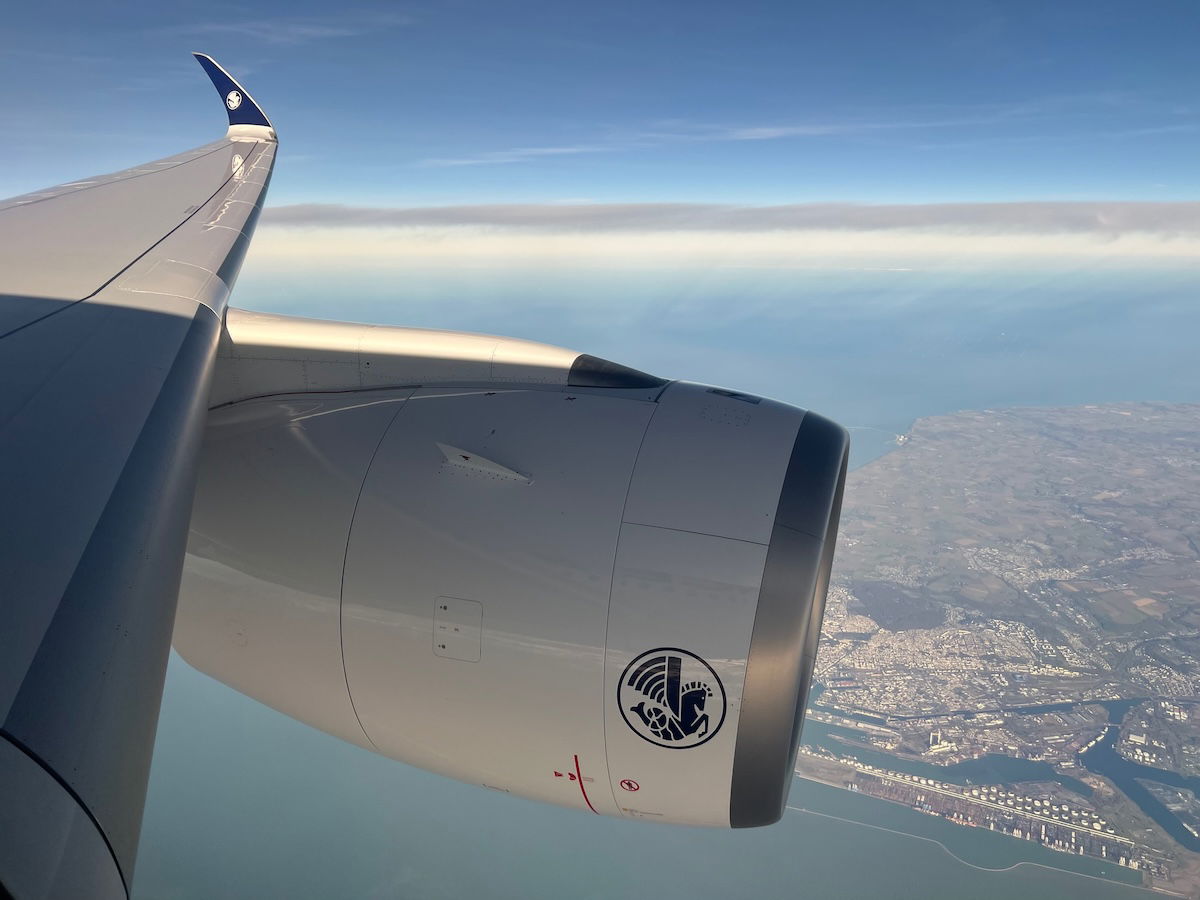
I’m not suggesting that this is a pro or con of flying with Air France, but I think it’s interesting to note the extent to which Air France’s focus is on being premium rather than just growing at all costs.
When you look at Air France’s fleet renewal strategy, the airline is actually largely sticking to smaller planes. For example, while carriers like British Airways and Lufthansa are largely taking delivery of A321neos, Air France doesn’t have a single “larger” narrow body on order. For that matter, Air France-KLM’s A321neos are all going to KLM (since Schiphol has capacity issues) and Transavia (a subsidiary where unit costs matter a lot more).
Why? Well, Air France wants to focus heavily on capturing premium traffic. The logic here is pretty simple, which is that Air France is blessed with a very lucrative origin & destination home market, especially in the age of premium leisure. So rather than focusing on carrying cheaper connecting traffic, the airline wants to increasingly focus on point-to-point flying.
We also see this reflected in terms of the layouts of newly delivered and reconfigured aircraft, from the A350-900s with 80 premium seats (48 business class and 32 premium economy), to the 777-300ERs with 108 premium seats (four first class, 60 business class, and 44 premium economy).
Bottom line
While a lot of online discussions about airlines focuses on the things that aren’t going right, I also think it’s nice to sometimes look at the things that are going right. If you ask me, Air France has come a long way over the past 12(ish) years, as the airline has gone from being similar or even partly behind its peers, to coming out as a clear, premium leader.
Is Air France perfect? Of course not, and the airline industry is very complicated. But it’s a nice example of how small investments across the board can make for a meaningfully differentiated experience. Perhaps it’s also a nice example of how if you want to look good, it’s ideal to have Lufthansa as a competitor. 😉
Where do you stand on this — anyone else impressed by how Air France has slowly and steadily been able to transform itself in this way?
source