


Air France is extending the suspension of flights to the Middle East regions while security concerns remain about the safety of operating to the area.
On May 4, 2026, Air France said it had been “forced” to prolong a flight ban “due to the security context at the destination and the closure of certain airspaces”.
Specifically, Air France flights to and from Riyadh, Saudi Arabia, will be suspended up until May 12, 2026, and to and from Dubai, UAE, until May 20, 2026.
Additionally, flights to and from Tel Aviv, Israel, and Beirut, Lebanon, will now not restart until May 20, 2026.
Since March 1, 2026, Air France has routinely extended flight bans triggered by the war in Iran to the four cities, unconvinced that it was safe to operate while the situation in the Middle East remains volatile.

In an update on its website, Air France said that it is “monitoring the evolving situation in the region in real-time”.
The resumption of our operations will remain subject to an assessment of the local situation, which is highly evolutive. This page will be regularly updated,” said Air France.
“The airline added: “We regret this situation and the inconvenience it causes our customers. Customers affected by these flight cancellations are notified individually.”
In response to strong demand from Asia following massive flight cancellations by Middle Eastern airlines, Air France has been deploying larger capacity aircraft on its flights from Bangkok, Singapore, Delhi, Mumbai, Shanghai, Tokyo, Osaka and Phuket since March 4, 2026.
The airline is also adding additional flights from Bangkok, Singapore, and Delhi. These measures will continue in the next weeks, and Air France teams are working to extend them to other destinations.
Air France-KLM cut its 2026 capacity outlook on April 30, 2026, and warned that the Middle East conflict would inflict a €940 million ($1.1 billion) fuel shock on the group in the second quarter alone, even as the Franco-Dutch carrier reported a near-breakeven Q1 operating result that improved by €301 million ($352 million) year-on-year.
The group posted an operating result of -€27 million (-$32 million) on revenues of €7.5 billion ($8.8 billion), up 4.4% on the same period of 2025.
UAE lifts all flight restrictions
On May 2, 2026, the General Civil Aviation Authority (GCAA) confirmed that all flight restrictions imposed during the recent regional conflict have been lifted, marking a full return to normal air navigation operations across the United Arab Emirates (UAE).
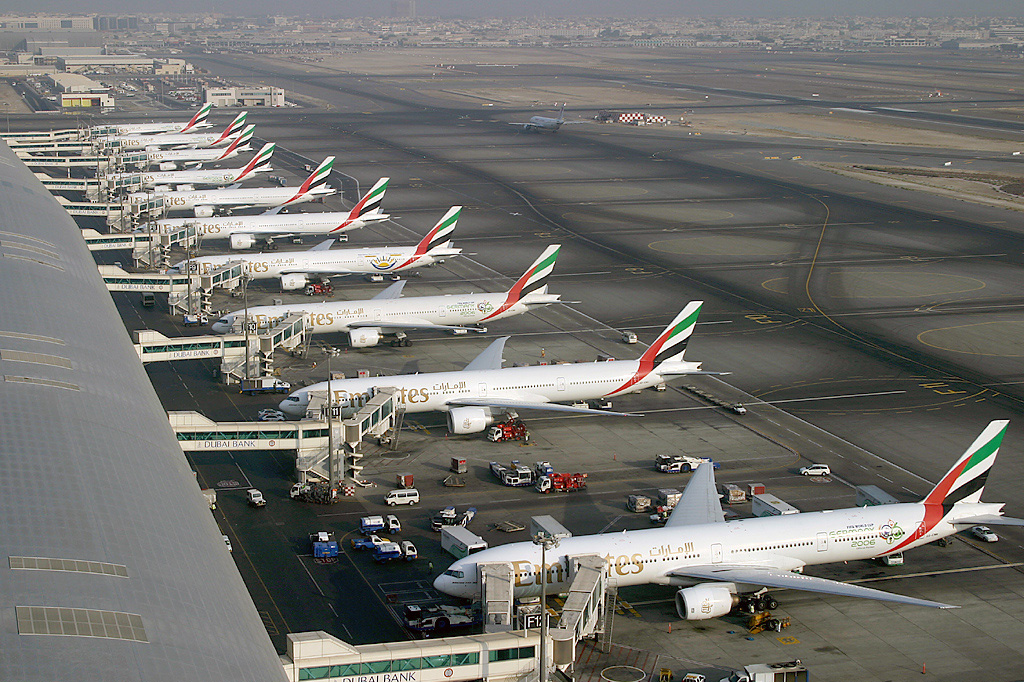
Emirates also announced that it has restored 96% of its global network following weeks of disruption caused by regional conflict.
The Dubai-based carrier announced on May 4, 2026, that it now operates to 137 destinations across 72 countries, with more than 1,300 weekly flights, representing 75% of the airline’s pre-disruption capacity.
Additionally, Dubai Airports said it was “scaling up operations” in line with “available regional rerouting capability”.
Paul Griffiths, CEO of Dubai Airports, said: “The extraordinary events of the past few weeks are unprecedented for any major airport hub such as DXB. Maintaining the smooth operation of DXB is therefore critical to keep global journeys moving. Our focus has been on keeping operations safe and consistent for our customers through close coordination and rapid decision-making across the entire airport community and beyond.”
However, on May 4, 2026, there were fresh concerns of further instability in the region after Iran reportedly launched missiles and drones at the UAE.
source