


Air Canada’s Boeing 787-8 Dreamliner fleet is the backbone of many of the airline’s most ambitious long-haul services. These nonstop flights connect Canada to Asia and South America, offering passengers some of the longest journeys the flag carrier operates. For 

The 787-8, the smallest Dreamliner variant, remains a vital part of Air Canada’s long-haul network even as the larger 787-9 expands its role. In 2025, the aircraft is scheduled to operate on 79 nonstop routes, with several sectors stretching over 5,700 nautical miles. This article explores the airline’s longest 787–8 services, provides a detailed look at the top 10 by distance, and examines what makes these flights possible from technical, operational, and passenger perspectives.
Air Canada’s Top Long-Haul 787-8 Routes In 2025

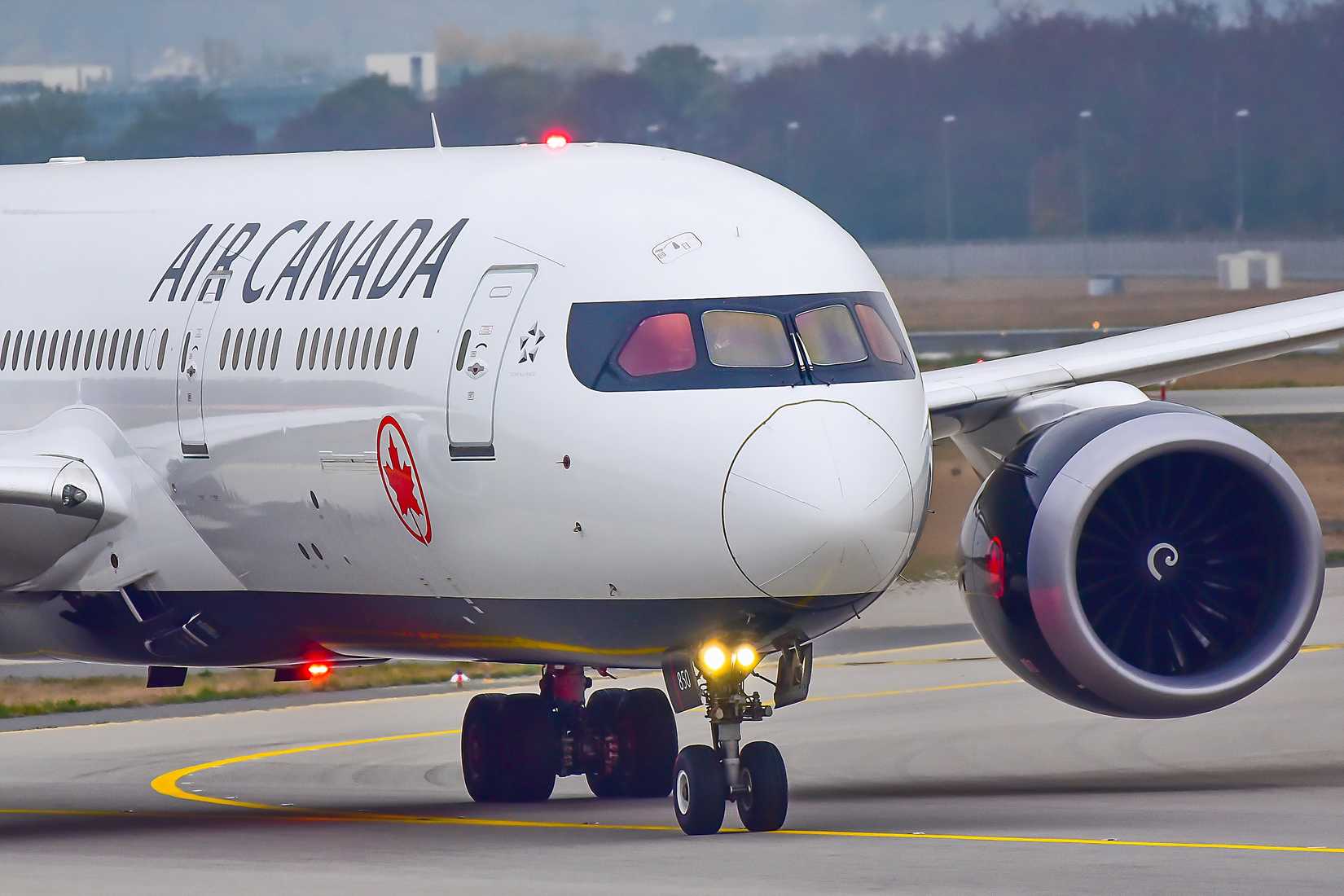
In 2025, Air Canada’s Boeing 787‑8 Dreamliners are busy linking Canada to destinations across the globe, operating an impressive 79 nonstop routes. Yet only a select few truly stretch the aircraft’s range to its limits. The very longest services all depart from 
Other notable long‑haul missions depart from Vancouver International Airport (YVR), such as Vancouver-Hong Kong, which comes in at5,552 NM (10,293 km), and Vancouver-Shanghai Pudong at4,879 NM (9,038 km).
South America is also well represented in the 787‑8 network, with Toronto-São Paulo and Montreal-São Paulo both exceeding 4,300 NM (7,964 km).What makes these routes particularly interesting is how Air Canada uses the 787‑8. Rather than deploying it solely on high‑capacity trunk routes, the airline often assigns it to what the industry calls ‘long‑and‑thin’ markets. These city pairs require a significant range but don’t have the passenger demand to fill a larger aircraft like the Boeing 777.
With its 255‑seat configuration, the 787‑8 strikes a balance between efficiency and comfort, making it ideal for sustaining year‑round service on these thinner but strategically important routes.In the next section, we’ll explore the ten longest 787‑8 flights in Air Canada’s 2025 schedule in greater detail, looking at not only their distances and flight times, but also the role each plays in the airline’s global network.
The 10 Longest Air Canada 787-8 Routes


When ranked by great‑circle distance, Air Canada’s longest Boeing 787‑8 Dreamliner flights stretch well beyond 7,590 miles and often remain airborne for more than 13 hours, second in distance only to the routes operated by the Boeing 777-200LR. These ultra‑long‑haul missions showcase the aircraft’s ability to connect Canada nonstop to remote destinations, from the heart of Asia to deep into South America, without the need for intermediate stops.
The list also reveals the geographic breadth of Air Canada’s long‑haul ambitions. According to Cirium, an aviation analytics company, three of the top five routes link Toronto and Vancouver directly to major Asian hubs. Meanwhile, two others connect Canada to South America’s largest cities.
|
Rank |
Origin |
Destination |
Distance (NM/km) |
Approx. Duration |
Notes |
|---|---|---|---|---|---|
|
1 |
Toronto Pearson International (YYZ) |
Osaka Kansai (KIX) |
5,753 NM (10,661 km) |
~13h 15m |
Longest Air Canada 787-8 sector |
|
2 |
Toronto Pearson International (YYZ) |
Seoul Incheon (ICN) |
5,740 NM (10,642 km) |
~13h 10m |
Major Asia hub connection |
|
3 |
Toronto Pearson International (YYZ) |
|
5,571 NM (10,326 km) |
~12h 40m |
Historic transpacific route |
|
4 |
Vancouver International Airport (YVR) |
|
5,552 NM (10,293 km) |
~12h 30m |
Key Asian financial hub |
|
5 |
Vancouver (YVR) |
|
4,879 NM (9,038 km) |
~11h 10m |
Gateway to Mainland China |
|
6 |
Vancouver (YVR) |
Seoul Incheon (ICN) |
4,438 NM (8,218 km) |
~10h 30m |
Strong O&D traffic + connections |
|
7 |
Toronto (YYZ) |
São Paulo/Guarulhos International Airport (GRU) |
4,406 NM (8,169 km) |
~10h 45m |
Longest South American 787-8 route |
|
8 |
Montreal (YUL) |
São Paulo/ Guarulhos International Airport (GRU) |
4,377 NM (8,115 km) |
~10h 40m |
Francophone–Latin America link |
|
9 |
Vancouver (YVR) |
|
4,345 NM (8,047 km) |
~10h |
Competitive Asian market (suspended/seasonal) |
|
10 |
Toronto (YYZ) |
Comodoro Arturo Merino Benítez International Airport (SCL) |
4,258 NM (7,886 km) |
~10h 20m |
Seasonal South American route |


For travelers, the Dreamliner’s arrival has been transformative. Before the 787‑8 joined the fleet, nonstop options from Canada to many of these destinations were limited or nonexistent. Today, travelers can board in Toronto, Vancouver, or Montreal and step off on the other side of the world, whether in the neon glow of Osaka, the bustling streets of São Paulo, or the skyscraper‑lined harbor of Hong Kong, without changing planes.
Why The 787-8 Is Perfect For These Long Routes

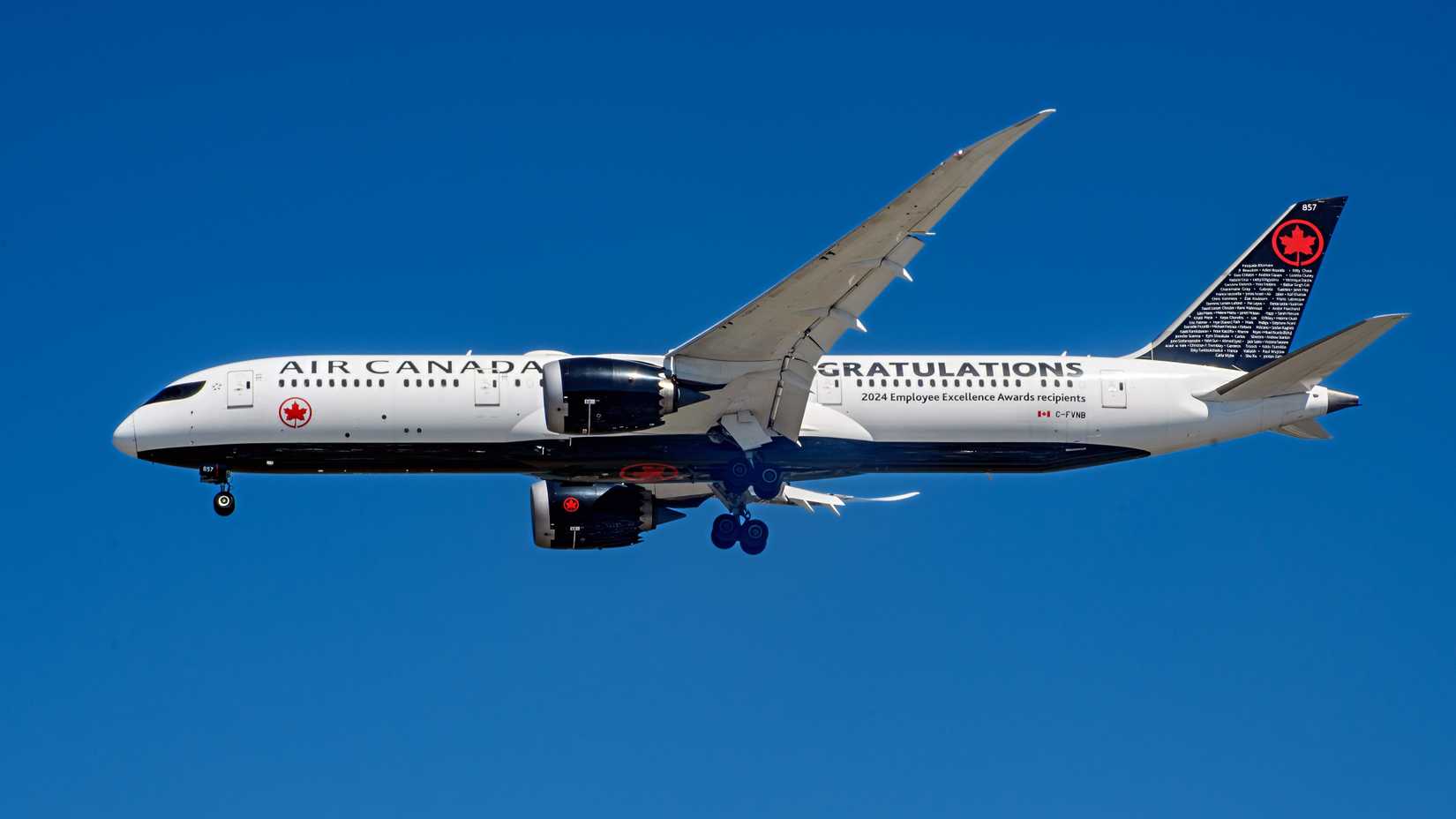
The 787-8 is more than just a modern airliner – it’s a long-haul workhorse built for efficiency, endurance, and passenger comfort. Air Canada takes full advantage of these strengths to operate nonstop flights on routes that would be challenging or uneconomical with larger, less efficient aircraft.
With a range of roughly 7,355 nautical miles (13,620 km), the 787-8 can comfortably handle ultra-long-haul sectors such as Toronto–Osaka or Vancouver–Hong Kong without refueling stops. Its composite airframe reduces weight, while advanced engines and aerodynamically optimized wings cut fuel consumption by up to 25% compared with older jets. This combination not only saves money but also reduces environmental impact, a growing priority for airlines and passengers alike.
These technical advantages make the 787-8 ideal for ‘thin’ long-haul routes, markets where demand is steady but not high enough for larger aircraft. By combining range, efficiency, and moderate capacity, the 787-8 allows Air Canada to offer nonstop convenience to passengers while maintaining profitability.
The Operational Challenges Of Ultra-Long Nonstop Flights


Flying nonstop for 12–13 hours is a complex operational puzzle that airlines like Air Canada must carefully manage. For the crew, multiple pilots rotate shifts, while cabin crew use onboard rest bunks to maintain alertness and service quality. As for passenger comfort, the meal service, cabin temperature, and in-flight entertainment schedules must be carefully managed over long periods, while efficient handling at airports ensures quick turnarounds despite long block times.
On the operational side, calculating the right fuel load is critical, especially when accounting for potential headwinds or diversions, while flights may face strong transpacific winds, equatorial thunderstorms, or other variable weather systems, requiring shrewd routing. Long sectors also require rigorous pre-flight checks and contingency planning for minor technical issues mid-flight.
For example, on the Toronto–Osaka route, Air Canada typically rosters four pilots to share the workload, with augmented cabin crews on rest rotations. Careful planning ensures both safety and efficiency, keeping flights on schedule while minimizing unnecessary fuel burn.
Taken together, these factors underline just how much coordination, foresight, and resilience go into every ultra long haul 787-8 departure. For Air Canada, success on these routes depends not only on the aircraft’s impressive range and efficiency, but also on the airline’s ability to consistently manage the human, technical, and environmental challenges that come with keeping a jet in the sky for half a day.
Passenger Experience On Ultra-Long-Haul Flights


Spending more than 13 hours in the air might sound exhausting, but Air Canada’s 787-8 Dreamliner is purpose-built to make the journey as comfortable and restorative as possible. From the moment you step onboard, the cabin feels noticeably more open and airy than older widebodies, thanks to its high ceilings, uncluttered design, and larger, dimmable windows that flood the space with natural light or darken at the touch of a button.
The aircraft’s lower cabin altitude, equivalent to about 6,000 feet instead of the usual 8,000, and higher humidity levels help reduce dehydration, headaches, and fatigue that can accompany long-haul travel. Combined with advanced air filtration and quieter engines, the result is a calmer, fresher environment that leaves you feeling less worn down when you land.
|
Air Canada’s Boeing 787-8 Configuration (aeroLOPA) |
|
|---|---|
|
Characteristic |
Details |
|
Cabin Configuration |
20 Business / 21 Premium Economy / 214 Economy seats |
|
Business Class |
1-2-1 reverse-herringbone layout; 21-in seat width; 79–80-in lie-flat beds; massage headrest; 18-in HD touchscreen; AC + USB-A/C power |
|
Premium Economy |
2-3-2 layout; 38-in pitch; 19.5-in width; 11-in or 9-in screens; USB and power available |
|
Economy Class |
3-3-3 layout; 31-in pitch; 17.1-17.3-in width; 9-in screens; shared AC power + USB-A |
|
Cabin Atmosphere |
Dimmable windows (~30% larger); cabin altitude ≈6,000 ft (vs 8,000 ft typical); advanced HEPA + odor filtration |
|
Entertainment & Connectivity |
Panasonic eX3 IFE with gate-to-gate access; seat-to-seat chat, shopping, accessibility apps; Intelsat 2Ku WiFi |
Every seat is equipped with a personal screen offering movies, TV shows, music, and games, along with USB ports and power outlets to keep devices charged. In business class, lie‑flat seats with direct aisle access and plush bedding turn the cabin into a private retreat, while premium economyoffers wider seats, extra legroom, and enhanced dining. Even in economy class, the modern seats, adjustable headrests, and thoughtful lighting make a difference on long sectors.
What’s On The Horizon? Future Routes And Fleet Evolution

Air Canada’s use of the 787‑8 Dreamliner has already opened city pairs once considered impractical, and the airline’s long-haul strategy continues to evolve. With new widebody aircraft expected in 2026, some 787‑8s may be redeployed to secondary long-haul markets, while larger 787‑9s or 777s could serve high-demand trunk routes.
This expansion will enable even longer nonstop flights and allow Canada to connect directly with more destinations across Asia, the Middle East, and South America, reducing the need for transfers through US or European hubs. Beyond route growth, passengers can expect continued enhancements in comfort, cabin design, and in-flight connectivity as the fleet modernizes.
Ultimately, the Dreamliner is not only today’s long-haul workhorse but also a bridge to tomorrow’s network, positioning Air Canada to link Canada with the world more efficiently, directly, and comfortably than ever before.


- IATA Code
-
AC
- ICAO Code
-
ACA
- Year Founded
-
1937
source