


Which are 

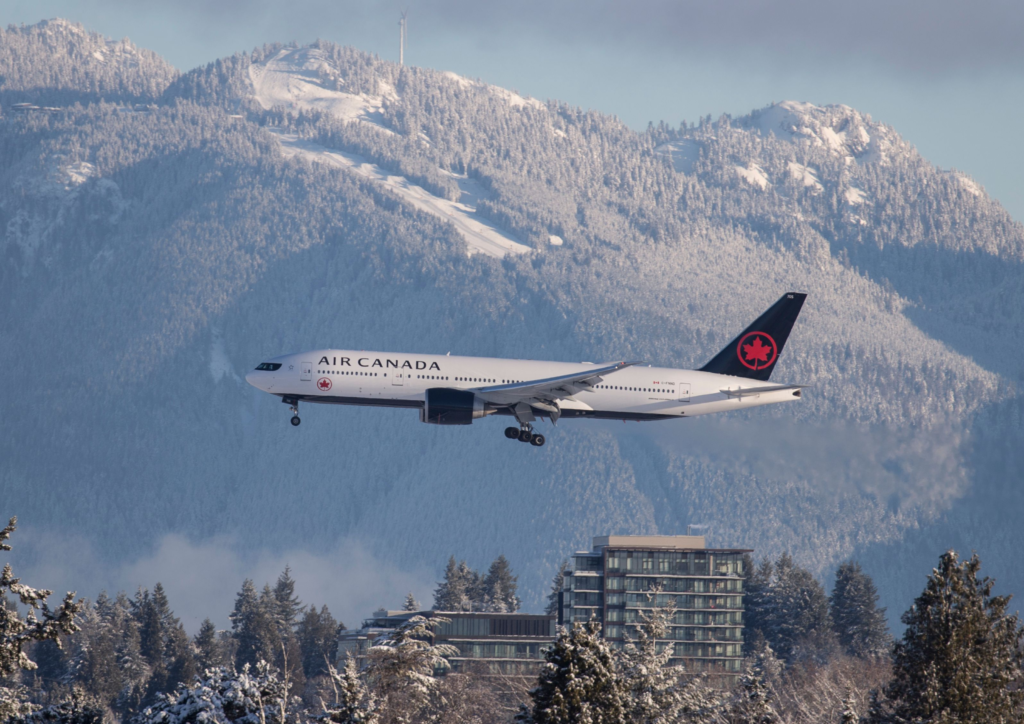
The 777-200LR, originally designed for ultra-long-haul operations of up to 9,500 nautical miles (17,000 km) nonstop, has become something of a rarity in the skies nowadays. Many other airlines have phased it out, as, for example, the neighboring 
This article will explore Air Canada’s top 10 longest nonstop 777-200LR routes in 2025, using data from Cirium and FlightAware. It will focus first on its three ultra-long-haul flagships flights in the Asia Pacific region and then examine the European connections that sustain its transatlantic footprint. We’ll then assess the factors that make these routes successful, as well as the views of the airline and experts, and what the future may hold for replacing the 777-200LR, which is approaching 20 years of service with Air Canada.
Vancouver–Singapore: Air Canada’s Longest Nonstop


At just under 8,000 miles, Vancouver–Singapore (YVR–SIN) is Air Canada’s longest nonstop 777-200LR route in 2025, and it’s the only operator offering a direct flight. The distance of 7,965 miles (12,800 km) makes it a true endurance test, operated usually four or five times a week as a direct link between Canada’s Pacific Rim hub and Southeast Asia’s financial powerhouse. For passengers, it eliminates the need for stopovers in Tokyo or Hong Kong.
The market is strategically important. Singapore is not just a destination, but also a gateway to Southeast Asia, with Changi Airport offering seamless onward connections, such as to the popular tourist hotspot of Bali. For Air Canada, the route taps into both premium business demand and the strong Southeast Asian diaspora in Vancouver.
Historically, travel between Canada and 
Vancouver–Sydney: The Pacific Bridge

The 7,750-mile (12,500 km) Vancouver–Sydney (YVR–SYD) service ranks as Air Canada’s second-longest 777-200LR route in 2025. Unlike the more limited Singapore schedule, Sydney is a staple: 364 flights annually and more than 109,000 seats offered. It connects two Pacific Rim nations and doubles as a bridge to the rest of Canada via Vancouver’s onward links.
Competition is not particularly fierce on this route, as Air Canada is currently one of only two companies offering a direct flight between these two cities. Another one is Qantas, which operates the Boeing 787. Air Canada has established a strong position, appealing to both Canadians traveling to Australia and Australians seeking connections to North America. With 

Air Canada has served 
Toronto–Delhi: The South Asian Lifeline


Toronto–Delhi (YYZ–DEL), at 7,245 miles (11,650 km), is Air Canada’s third-longest 777-200LR route. With nearly 100,000 seats across 332 flights annually, operating every day, it’s a crucial international connection. The Indian diaspora in Toronto, one of the largest outside India, provides a steady stream of passengers, while cargo demand further strengthens the economy.
For travelers, the nonstop service avoids connections through European or Gulf hubs. That convenience makes Air Canada the most direct option for family reunions, business travel, and cultural events, while also fostering growing ties between Canada and India.
Historically, India flights were complex, with technical stops or routing constraints. The 777-200LR enabled Air Canada to launch true non-stop flights, a game-changer for both communities. Despite challenges like restricted Russian airspace, the aircraft’s endurance has kept the Toronto–Delhi service viable.
Interestingly, another nonstop operator on this route, Air India, also uses the Boeing 777, specifically the -300ER and occasionally the same -200LR variant.
Crossing The Atlantic: Europe’s Key 777-200LR Routes

Beyond its ultra-long-haul routes, Air Canada deploys the 777-200LR across key European markets. In 2025, routes from 
Rome Fiumicino Airport and 


Top 10 Longest Air Canada Boeing 777-200LR Routes (2025)
|
Rank |
Route |
Distance (miles) |
Distance (km) |
|---|---|---|---|
|
1 |
YVR–SIN |
7,965 mi |
12,800 km |
|
2 |
YVR–SYD |
7,750 mi |
12,500 km |
|
3 |
YYZ–DEL |
7,245 mi |
11,650 km |
|
4 |
YVR–LHR |
4,735 mi |
7,620 km |
|
5 |
YYZ–FCO |
4,350 mi |
7,000 km |
|
6 |
YYZ–MUC |
4,100 mi |
6,600 km |
|
7 |
YYZ–ZRH |
4,055 mi |
6,525 km |
|
8 |
YYZ–FRA |
3,965 mi |
6,380 km |
|
9 |
YYZ–CDG |
3,725 mi |
6,000 km |
|
10 |
YYZ–AMS |
3,700 mi |
5,955 km |
Europe has always been Air Canada’s backbone market. Even though the 777-300ER takes the lead, the 777-200LR plays a supporting role, filling in seasonal demand spikes and ensuring payload flexibility during the winter season. This dual use demonstrates the aircraft’s versatility in both long-range and mid-range missions.
Factors, Expert Views, And Future Replacements


Several factors influence why the 777-200LR is deployed on Air Canada’s longest routes. Geography is perhaps the most obvious advantage. Vancouver faces the Pacific Ocean, providing it with a geographic advantage for nonstop connections to Asia-Pacific markets like Singapore and Sydney. Toronto, meanwhile, is a natural hub for both Europe and South Asia, making nonstop flights to Delhi and major European capitals viable.
Demand patterns are equally critical. Toronto–Delhi thrives on diaspora and VFR (visiting friends and relatives) traffic, while Vancouver–Singapore and Vancouver–Sydney combine strong premium business demand with robust leisure segments. Europe is distinct: its markets are primarily driven by business, with strong seasonal surges in leisure traffic. By assigning the 777-200LR to these routes, Air Canada ensures that it can flex capacity while retaining the aircraft’s ability to carry additional cargo. This often-overlooked revenue stream significantly supports long-haul profitability.
Cargo deserves special mention. Belly freight is particularly important on routes to Asia and India, where pharmaceuticals, textiles, electronics, and perishables flow in both directions. The 777-200LR is uniquely positioned to maximize both passenger and cargo loads without significant trade-offs. For instance, on the Toronto–Delhi route, the ability to move cargo alongside full passenger loads ensures that the economics remain favorable, even in shoulder seasons when passenger demand softens.

Looking to the future, one day Air Canada will face the decision about how to replace its small but strategically vital 777-200LR subfleet. For example, the Airbus A350-1000 can offer a clear pathway, with sufficient range and efficiency to sustain ultra-long-haul operations, such as Vancouver–Singapore. The Boeing 777X (particularly the 777-8) is another potential candidate, although its program delays have made carriers cautious. For Air Canada, any replacement must offer not only the endurance for missions beyond 7,000 miles but also the belly cargo space that is essential for profitability.
So far, the 777-200LR remains indispensable. In 2025, it continues to perform missions successfully, making it both a workhorse and a symbol of ambition in the carrier’s long-haul strategy.
The Worldliner’s Enduring Legacy

Air Canada’s 777-200LR network in 2025 is a rare example of an airline fully leveraging an aircraft that many carriers have already retired. From the near-8,000-mile Vancouver–Singapore link to the cultural and commercial lifeline of Toronto–Delhi, and the critical Pacific bridge to Sydney, the type underpins some of the airline’s most ambitious missions. Its deployment on major European routes, such as Frankfurt, Paris, and Rome, shows that the aircraft is not just about extreme range, but also about versatility in the face of fluctuating demand.
Yet the continued reliance on the 777-200LR highlights both opportunities and challenges. The opportunities lie in its ability to differentiate Air Canada from its North American rivals. As Delta retired its 777-200LR fleet, Air Canada remains the only carrier on the continent to field a 777-200LR on this scale. The challenge, however, lies in the aircraft’s age, fuel burn, and maintenance costs. As more efficient types, such as the A350 and 787, dominate new deliveries, the -200LR will inevitably become harder to justify economically.
For passengers, the benefit is immediate: nonstop links that save time and offer smoother journeys, particularly to destinations in Asia where one-stop connections can add hours. For Air Canada, the benefit is strategic positioning. By holding onto the 777-200LR longer than most, it has carved out unique nonstop markets that reinforce its role as a global network carrier, not just a North American player.
Looking ahead, the eventual replacement of the 777-200LR will mark the end of an era. Whether it is the Airbus A350-1000 or the Boeing 777X that takes its place, the core goal will remain: to connect Canada directly to the furthest parts of the world. Until that day comes, the 777-200LR continues to serve as both a workhorse and a flagship, proving that even two decades after its debut, Boeing’s “Worldliner” still lives up to its name in Air Canada’s livery.


- IATA Code
-
AC
- ICAO Code
-
ACA
- Year Founded
-
1937
source