


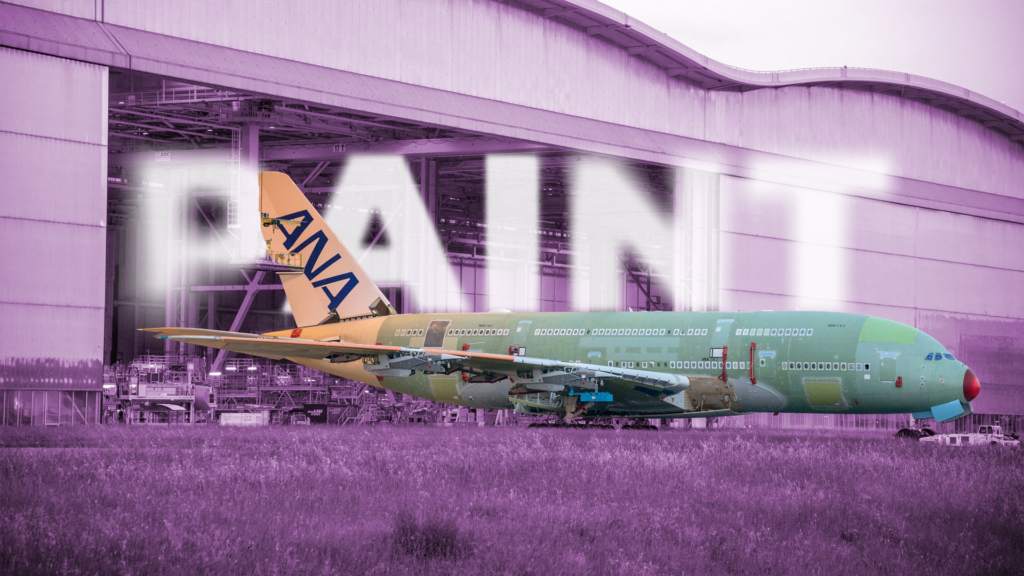
The Airbus A380 is the world’s largest passenger jet, and as such, it requires substantial paint to keep it looking ready for passenger service. With an enormous tail, two full-length passenger decks, four engines, and the largest wings to be placed on any passenger airliner, painting and maintaining liveries on these rare superjumbos is not for the faint of heart, as it takes more paint, more time, and more money to paint these planes than any other aircraft.
Commercial airliners receive liveries for advertising and branding purposes, but paint also serves to protect and preserve the fuselage metal underneath. Commercial airlines typically wear multiple layers of paint that are sprayed onto the aircraft, and once applied, they usually stay on the plane for seven to 10 years before being removed and replaced. This process can take close to two weeks and costs tens or hundreds of thousands of dollars. So, how does this work on the Airbus A380?
Overview Of The Airbus A380

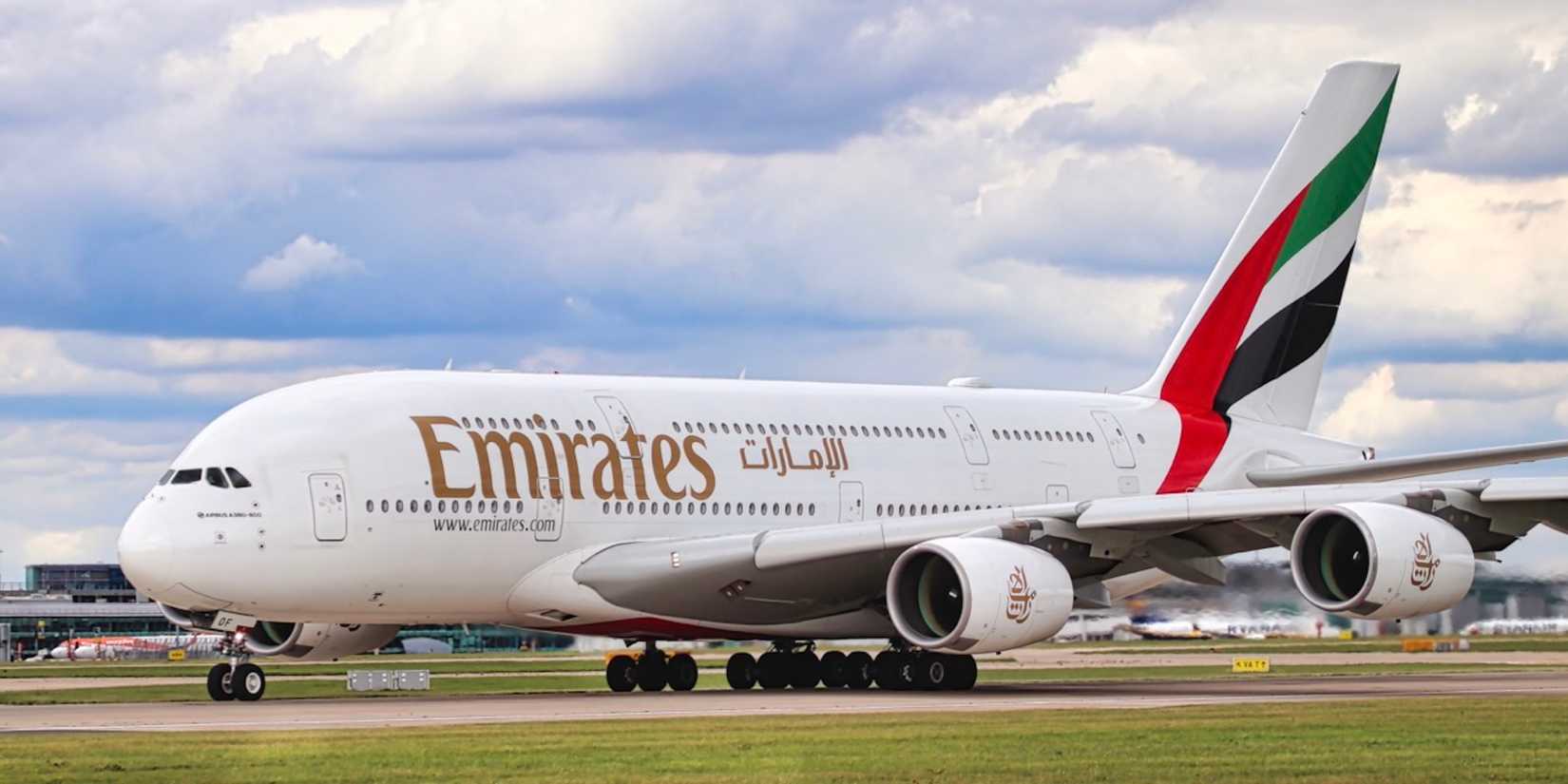
The Airbus A380 is the largest passenger airliner ever made. Airbus began developing the A380 in the 1990s to challenge the Boeing 747, as Boeing and Airbus developed full product lines that were complementary or directly competing with one another, except at the very top. Therefore, Airbus decided not just to compete with the 747, but to trump it in every aspect and make the legendary “Queen of the Skies” look like yesterday’s news.
The A380 was only produced in one variant, the Airbus A380-800. This aircraft was designed with potential growth added in, with oversized wings and an incredibly high Maximum Takeoff Weight (MTOW) for its size. The plane was essentially designed as a shrink, comparable to the Airbus A319-100 or Airbus A330-200. But while it was designed to be the smallest version of a family, the A380-800 is still an enormous aircraft.
The Airbus A380-800 is roughly 239 feet (72.72 meters) long with a wingspan of 261 feet and nine inches (79.75 meters), while its tail rises to a height of 79 feet (24.09 meters). It also has an MTOW of 575T, propelled by four Rolls-Royce Trent 900s or four Engine Alliance GP7200s (a blend of the General Electric GE90 and the Pratt & Whitney PW4000). Then, there’s its most striking design feature: the two full-length passenger decks that typically carry between 450 to 550 passengers.
How Is The A380 Painted?

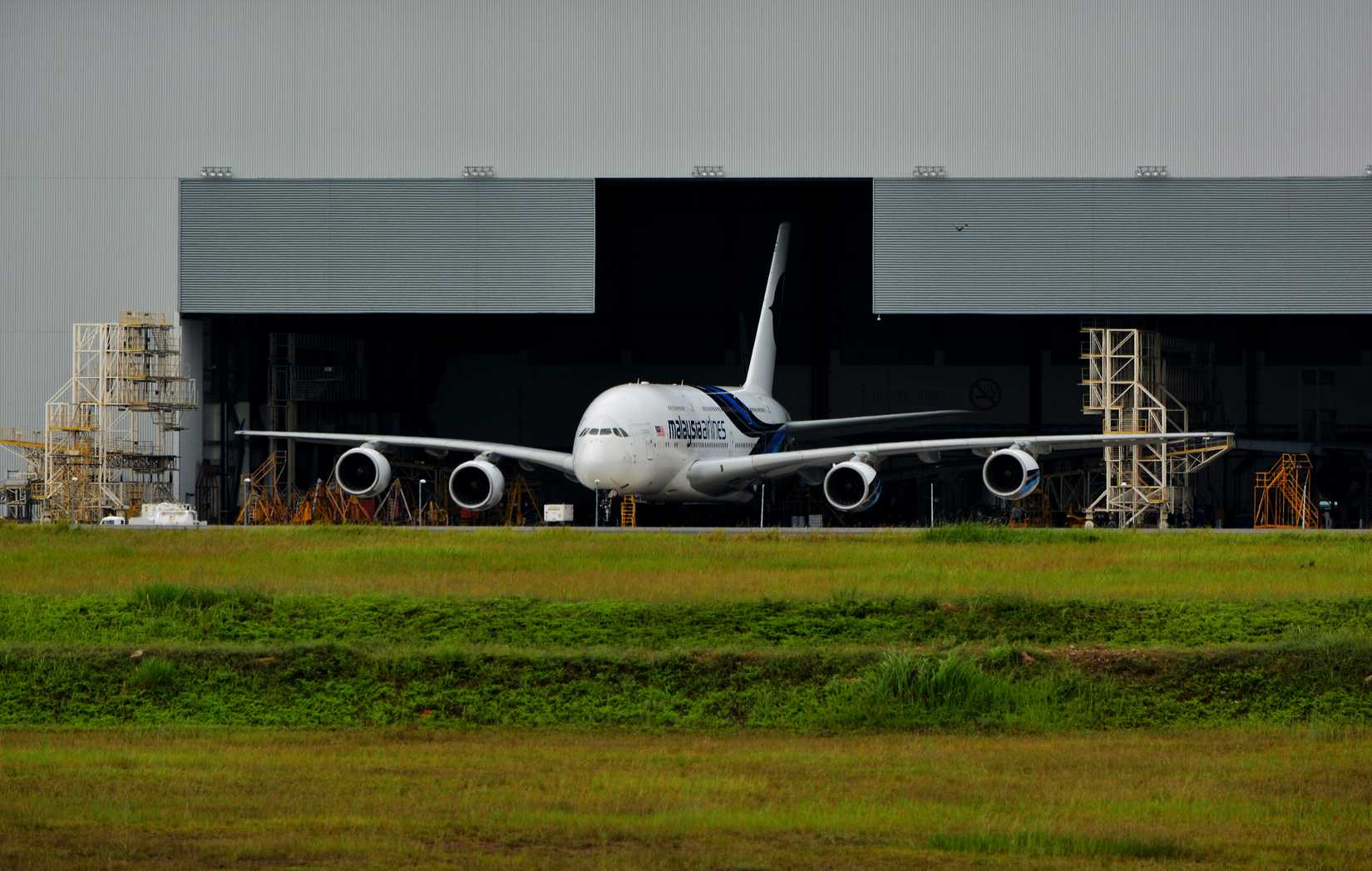
Aircraft paint is applied fresh onto a newly constructed airliner, and then it’s stripped away before being replaced when aircraft are repainted every seven to 10 years. At the start of the painting process, various components need to be covered, such as windows and the engine intakes. After this, the old paint is removed, largely as a weight-saving measure. Qantas quotes that the Airbus A380’s paint can weigh over 1,102 pounds (500 kilograms).
Once the paint is removed, the aircraft is sanded and rinsed to reveal the bare metal underneath. From there, airlines apply primer to help seal the fuselage. The base color is then added, followed by the rest of the design. Airlines use paper to cover up parts of the fuselage to ensure that various colors don’t bleed into one another, and then a final clear coat of paint is applied onto the aircraft. While aircraft are usually only repainted once a decade, they’re typically washed every month to remove dirt and grime.
|
Repainting Process |
|---|
|
Covering of windows, engine intakes, and sensitive equipment |
|
Removal of current paint layers |
|
Application of primer and base color |
|
Covering up of design elements to prevent bleed |
|
Application of additional colors and designs |
|
Application of clear coat |
The process of repainting a plane is a carefully choreographed industrial process that looks more similar to aircraft maintenance than an art room. While Qantas’s livery is relatively simple (and as such doesn’t require as much paint), airlines with more extravagant designs and heavier paint materials may require as many as 950 gallons (3,596 liters) to paint this behemoth. This can cost upwards of $300,000 each time.
Why Is This A Problem For Airlines?

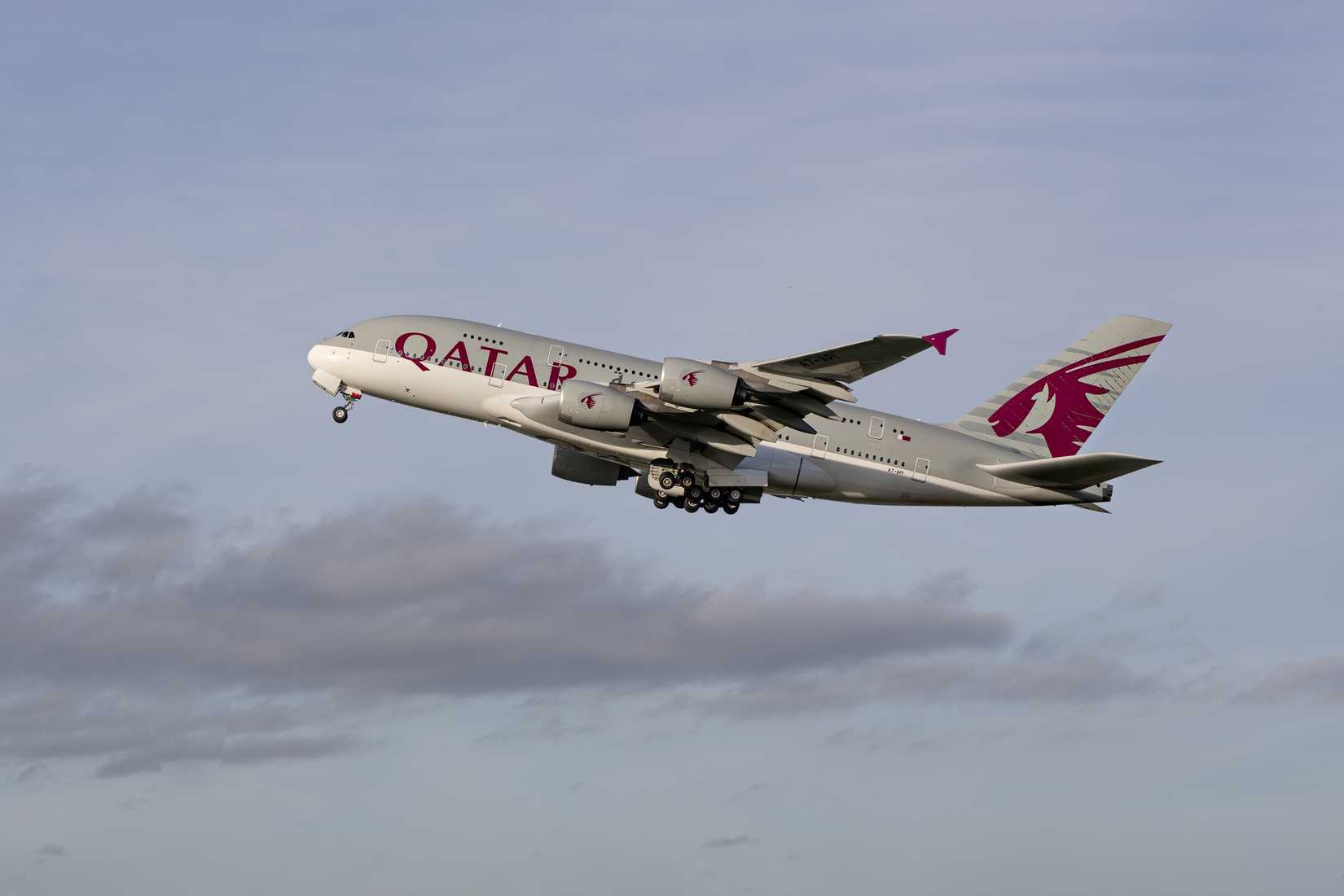
Paint on its own is not a major issue for airlines, and higher costs are usually reflective of design choices with an airline’s livery rather than an issue with the plane itself. However, this does indicate a larger problem with the Airbus A380: it’s enormous. $300,000 and nearly 1,000 gallons to repaint an Airbus A380 for weeks is expensive and time-consuming. It’s a logistically challenging procedure for airlines, all stemming from its size.
Paint is not the only maintenance item that balloons in cost with the Airbus A380. Of course, general maintenance is pricey, but the A380 also has four engines. Not only does it have double the engines of any airliner currently in production, but the models that it uses, the GP7200 and the Trent 900, are unique models that have largely become orphans. As such, these engines are becoming prohibitively expensive to own and maintain.
The interior floor space is what the Airbus A380 is all about, but this also has a drawback. Air France, for example, had previously stated that cabin reconfigurations could cost close to $50 million per aircraft, and instead retired its A380 fleet during the COVID-19 pandemic. Reportedly, high reconfiguration costs also turned 

Where Else Sized Posed An Issue For The A380
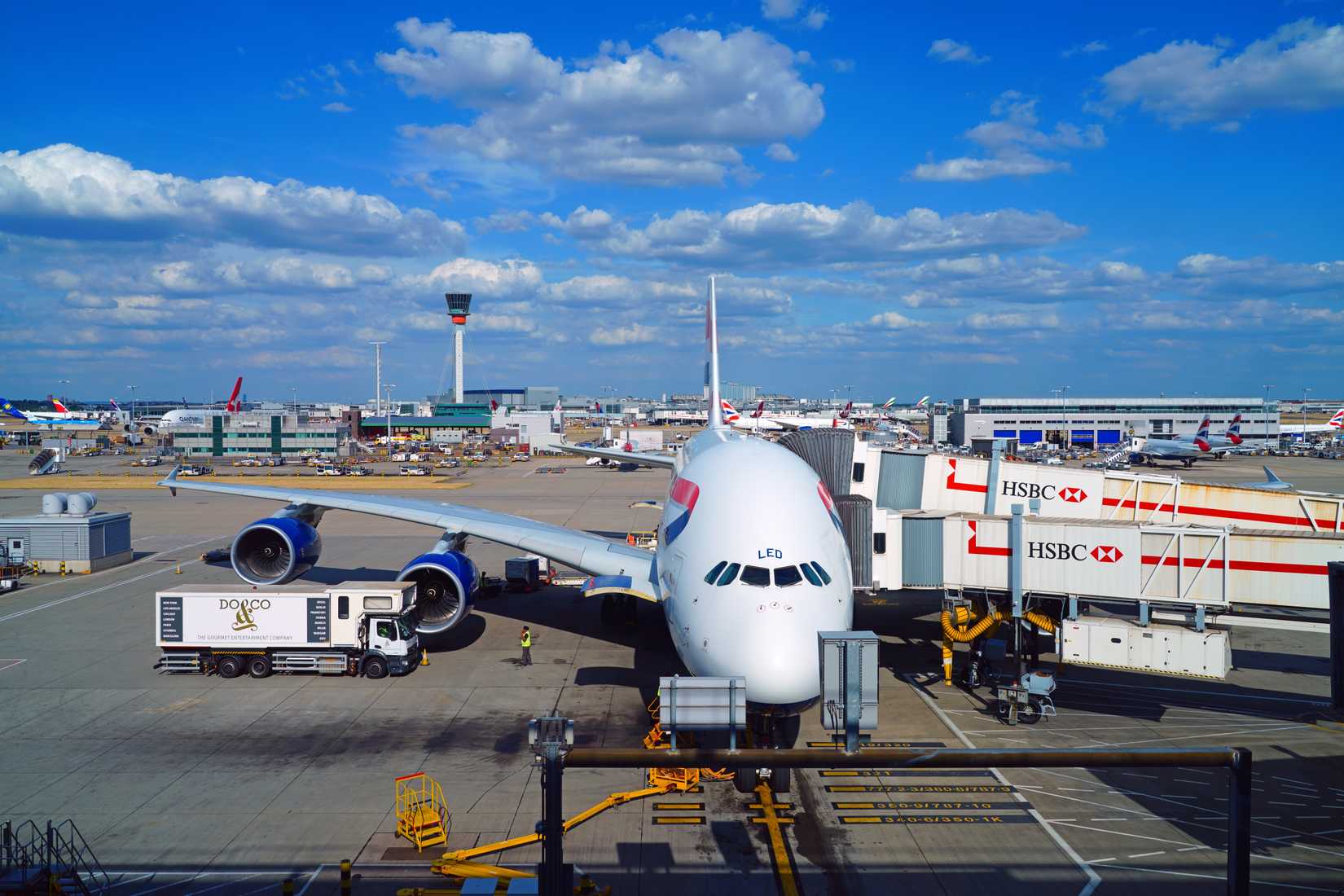
The Airbus A380 has a wingspan of 261 feet nine inches (79.75 meters), placing it in ICAO’s Code F for airports. The challenge is that existing airport ramp areas, taxiways, and runways were largely designed for Code E aircraft, like the Boeing 747-400 and Boeing 777-300ER. As such, many airports had to either redesign gates and movement areas or turn away the Airbus A380. While many airports did make alterations, some prominent airfields, like 
The Airbus A380’s takeoff and landing distances are actually comparable to most other widebodies, but with an MTOW of 575T, it’s heavier than virtually anything else in the skies. This meant that taxiways and runways needed to be strengthened to accommodate the enormous double-decker, costing airports more money. A380s also continue to face restrictions on which taxiways they can use at many destinations, which can cause logistical issues at airports.
|
ICAO Code |
Aircraft |
|---|---|
|
Code F |
Airbus A380-800, Boeing 747-8, Boeing 777X (wings unfolded) |
|
Code E |
Airbus A330, Airbus A340, Airbus A350, Boeing 747, Boeing 777, Boeing 787, McDonnell Douglas MD-11 |
|
Code D |
Airbus A300, Airbus A310, Boeing 757, Boeing 767, McDonnell Douglas DC-10, Lockheed L-1011 |
This makes the Airbus A380 hopelessly impractical for airlines to operate. Already, there is a limited number of city pairs that can support the level of capacity that it offers, and when you remove airports that cannot accommodate it, this number goes down even further. This is a particular issue for future service, as while airports made modifications in the 2000s and 2010s to handle the A380, it’s unlikely that any additional airports will want to spend the necessary money to accommodate it in the future.
What If The Airbus A380 Were Even Bigger?

Visually, the Airbus A380-800’s wings are enormous for the aircraft’s length, and the A380 is shorter than the Airbus A340-600, Airbus A350-1000, Boeing 747-8, and Boeing 777-300ER. It also has an MTOW of 575T and has a range of roughly 7,990 NM (14,800 km), which is more than almost any airline needs. The aircraft looks the way it does because Airbus designed it with growth in mind, intending to create an entire family of double-deckers.
The A380-800 is comparable to the Airbus A319-100 or A330-200, and Airbus intended to develop an A380-900, fitting the same role as the A320-200 or A330-300. The A380-900 would have lower range (but likely still good enough for practically any airline), but it would have roughly 50 to 100 additional passengers, greatly reducing per-seat expenses, and more cargo space. This was the optimized variant that was meant to be a sales hit.
Except, there’s a reason why Airbus released the A320 first, or the A330-300 first. Not even taking into account whether a market existed for such an aircraft, shrinks have poorer operating economics than a stretch. As such, the A380 had trouble competing with the Boeing 777-300ER (a stretch that sold over 800 units), and it was hopelessly outmatched by the next generation of widebodies. Airbus designed the plane to be too large, too heavy, and too capable for it to become a sales hit.
Rundown Of The Airbus A380-800

Only 251 A380s were ever sold, and Airbus never made a profit on the program. The reasons why the A380 was a failure are endless, ranging from the aircraft’s design as a shrink to the lack of a suitable market, or even that the aircraft’s engines were suboptimal. More likely, however, it’s a combination of all of these factors that led to the dismal sales record, and had any one of these not been present, more A380s could have been sold.
As previously discussed, everything costs more with the A380, right down to painting it. But had Airbus released the bigger variant first, or if it had made the A380-800 smaller and less capable, then we likely wouldn’t be discussing the A380’s failure to the extent that we do today.
source