


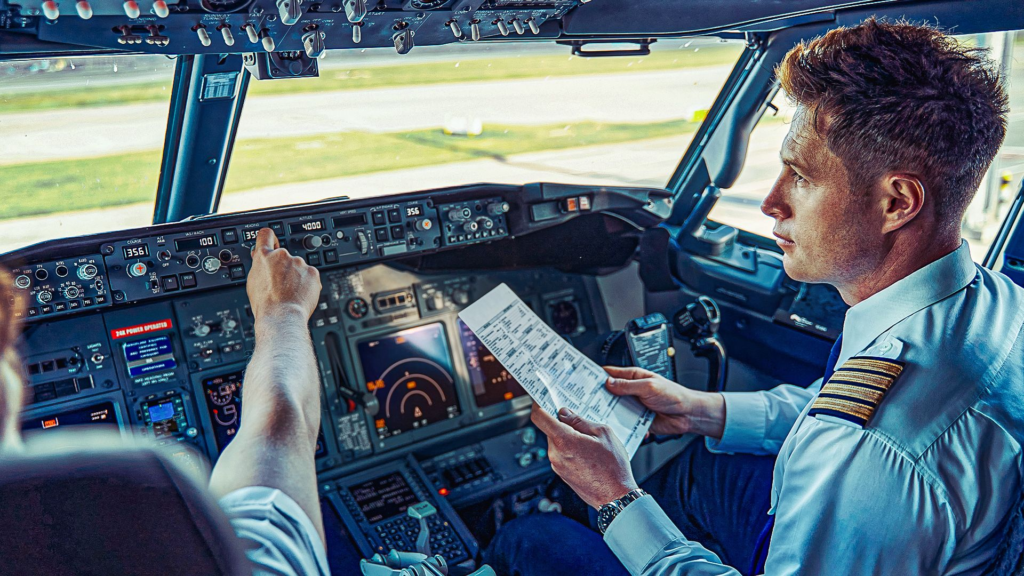
There are few professions as romanticized as the commercial airline pilot, and it is perhaps no surprise that traveling the world while being paid sounds like a dream job for many. In the US, pilot salaries at the “big three” airlines, 


According to the US Bureau of Labor Statistics, the median pay for a commercial pilot in May 2024 was $198,100 per year, making it one of the best-paid careers in the US. Compared to the US median wage of $49,500, a pilot makes 4 times as much. However, salaries can vary widely depending on the airline you work for and the number of years of experience a pilot has, most notably the salary gap between a first officer and a captain. But also factors such as aircraft size, location, and training background can influence how much a commercial pilot earns.
The Difference Between A First Officer And A Captain


All pilots are highly trained to ensure the safe and efficient execution of every flight, regardless of rank, and carry the responsibility of transporting hundreds of passengers safely. This responsibility is also a key factor when differentiating first officers and captains. Captains, also named “the pilot in command,” have the final say in any decision that needs to be made in relation to the flight, even if it is against the airline’s preference. They are expected and protected by law to make the decision they deem most responsible, based on their years of experience. First officers tend to have less experience and are thus not as qualified to recognize and avoid risks in the way an experienced captain can.
An example illustrating this is when a Delta Air Lines captain refused to fly an airplane that had been cleared to fly by maintenance. The captain had flown the aircraft on his previous flight and knew something was not right with it, despite maintenance having inspected and approved the aircraft without finding any issues. And even though the captain expressed his confidence in maintenance, he refused to fly the airplane and requested another one, stating he could ignore the potential risk of flying an aircraft with a defect. A decision that a captain is allowed to make at his sole discretion.
|
Salary |
Experience |
Timeframe |
|
|---|---|---|---|
|
First Officer (Regional) |
$55k – $80k |
1,500 – 2,500 |
12-24 months |
|
Captain (Regional) |
$85k – $120k |
2,500 – 3,500 |
2-4 years |
|
First Officer |
$120k – $160k |
3,500 – 4,500 |
4-6 years |
|
Airline Captain |
$200k – $239k+ |
5,000+ |
6+ years (long-haul ops) |
It comes as no surprise that this increased responsibility also comes with greater pay, and that there is a significant difference in the pay of a first officer and a captain. According to Acron Aviation Academy, a first officer at a regional airline earns between $55,000 and $80,000. At a major airline such as Delta Air Lines or United Airlines, a first officer’s salary grows into the six figures, ranging from $120,000 to $160,000. On the other hand, a captain at a regional airline earns somewhere between $85,000 and $120,000, whereas a captain at a major airline has a salary exceeding $200,000. To reach this salary level, a pilot needs over 5,000 flight hours and six or more years of experience, including long-haul experience.
A Deep Dive In A Pilot’s Compensation Structure


To understand exactly how much a pilot earns, it is important to know that the compensation structure for most airline pilots is not as straightforward as in other professions. In the US, pilots are not paid a fixed wage. Instead, they are paid per flight hour, which basically means a pilot only receives compensation while in the airplane with the engines running. So to find out a pilot’s salary, you will need to multiply the number of flight hours by the hourly wage. It is important to note that most airlines provide pilots with a minimum monthly guarantee. This ensures the pilot’s payment even in a month with many cancellations due to ongoing issues.
The majority of full-time pilots are scheduled to fly between 70 and 85 hours per month and are limited to 1,000 hours annually. However, with most airlines facing pilot shortages, overtime pay has become increasingly common. Airlines can pay up to 300% above the hourly wage to find pilots to operate a flight and avoid cancellation.
However, a pilot’s compensation is more than hourly wages. In the US, pilots also receive a generous expense allowance when away from their home base, often known as a “per diem”. With this per diem, pilots need to cover expenses on their trip, such as food. Furthermore, airlines have traditionally offered their pilots numerous benefits, such as sign-on bonuses, insurance, retirement plans, and, of course, discounted or free flights. Benefits that are increasingly important for airlines to attract and retain pilots with looming shortages.
Factors That Determine The Total Salary Of A Commercial Pilot


It goes without saying that a beginning pilot will have the lowest salary, but there are other factors that influence a pilot’s hourly wage beyond experience. A significant factor influencing a pilot’s hourly wage is their employment history. Generally speaking, loyalty is valued and rewarded by airlines, and the longer a pilot stays with a single airline, the higher their hourly wage is, even compared with other pilots with the same amount of experience.
Another factor significantly influencing a pilot’s hourly wage is the aircraft type. According to Thrust Flight, an American Airlines pilot’s salary for a 737 first officer with 3 years of experience was $161 per hour in 2022, while a 777 first officer with the same level of experience was paid $198 per hour. Furthermore, most pilots belong to unions in the US, which negotiate salaries, benefits, and working conditions. The strength and size of these unions, as well as the agreements they have previously reached, can play an important role in determining an airline pilot’s total compensation.
Generally speaking, the salaries of pilots in the United States are some of the highest in the world. Differences in pilot salaries are often influenced by regional economic conditions, the strength of unions, and the airlines. In Europe, commercial pilots tend to earn less than in the US, while salaries in Asia vary widely. In China, for example, pilots can earn between $300,000 and $500,000 annually due to the rapid growth of the industry. This makes China one of the highest-paid markets for airline pilots, even surpassing the United States. Another region with competitive salaries is the Middle East, with average salaries of $100,000 to $200,000. A special feature in the Middle East is that salaries are often tax-free and generous benefit packages, potentially making airlines in this region financially appealing even with a lower base salary.
Should I Still Become A Pilot In The United States In 2025?


Whether it is still worth becoming a pilot in 2025 and beyond is, of course, a difficult question to answer. After all, becoming a pilot is for many more than just a job, but a lifestyle and often a lifelong dream. Something worth considering when deciding to become a pilot is the work schedule. Being a commercial pilot is definitely not a standard 9-to-5 job; flight schedules are often variable, and multi-day trips with overnight layovers are not uncommon. Depending on the distance, pilots might also experience jet lag and fatigue. Typically, pilots receive their schedules on a monthly basis, with some airlines even allowing pilots to bid on preferred routes. Good to know, is that as you increase in seniority, you tend to have more say in aircraft and schedule preferences.
After flight school and reaching the 1,500 flight hour mark needed to receive an Airline Pilot Certificate (ATP), pilots will typically start their career at a regional airline such as Envoy Air or Horizon Air. However, with the current pilot shortages in the US, some first officers can progress to captain within as little as two years. Besides this fast career progression, regional airlines are now also offering attractive signing bonuses.
The good news for everyone who decides to become a pilot is that the demand for commercial pilots will remain strong over the next decade. The US Bureau of Labor Statistics projects a 5% increase in employment opportunities for commercial pilots between 2024 and 2023, compared to only 3% for all jobs. Driving this are the increasing number of pilots retiring and the expected growth in global travel demand overall. This is already resulting in shortages today, and it is not expected that supply will exceed demand anytime soon. As a result, pilots are also likely to see an increase in salary and benefits, in addition to job guarantees.
source