


Bell Textron said its Nacelle Improvement (NI) Program has cut maintenance hours on US Air Force Special Operations Command (AFSOC) CV-22 Ospreys by 75% and lifted fleet readiness by more than 10% since the first upgraded aircraft entered service in late 2021.
The figures are drawn from more than 10,000 accumulated flight hours on NI-modified CV-22s, according to Bell. The company says the program has saved AFSOC over 24,000 maintenance hours, the equivalent of more than 1,000 days of maintainer time freed up for other tasks.
The announcement lands as the broader V-22 program remains under sustained safety and readiness scrutiny, with flight restrictions in place since late 2023 and a separate proprotor gearbox upgrade only now beginning to reach the fleet.
A 75% cut in maintenance hours

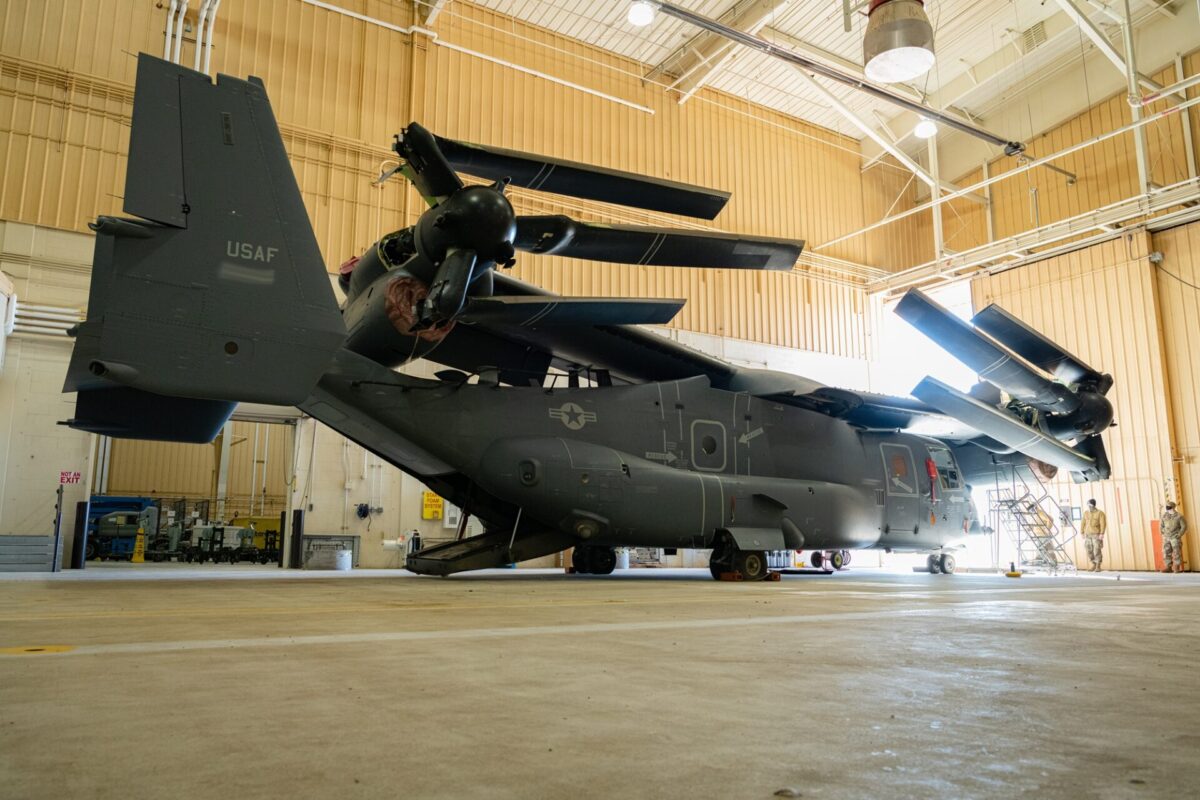
The initial nine-aircraft batch was contracted under an $81 million deal awarded to Bell Boeing by the US Naval Air Systems Command (NAVAIR) in December 2020. The first CV-22 from the US Air Force’s 20th Special Operations Squadron at Cannon Air Force Base, New Mexico, was modified at Bell’s Amarillo Assembly Center in Texas and returned to flight in December 2021.
Approximately 60% of V-22 maintenance man-hours are spent inside the nacelles, the engine housings on each wingtip that tilt to give the Osprey its vertical lift and forward flight capabilities. The NI upgrade targets that maintenance burden by simplifying the nacelle’s wiring architecture, redesigning hinges, latches, and access panels, and reusing repairable components. Bell Boeing has said the program required the engineering of more than 1,300 new V-22 part numbers.
Fleet progress and quoted figures

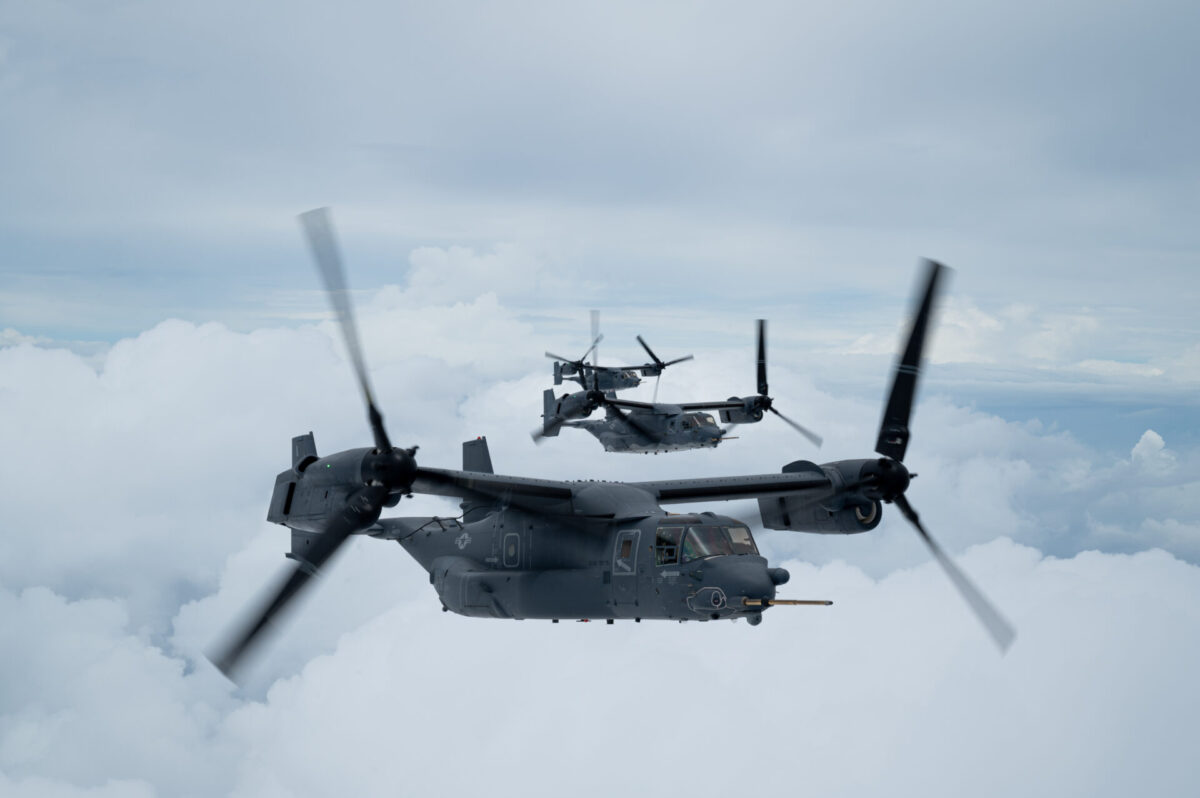
AFSOC operates a fleet of 51 CV-22s. In September 2025, AFSOC commander Lieutenant General Michael Conley told reporters that 31 of them had completed the NI modification. The remaining aircraft continue to cycle through Amarillo, which also produces new-build Marine Corps MV-22, Air Force CV-22, and Navy CMV-22 airframes.
“Since the initial rollout, the CV-22 Nacelle Improvement has saved AFSOC more than 24,000 maintenance hours, equating to a savings of more than 1,000 days of maintainer time that can be used toward other high-priority needs,” the V-22 Joint Program Office’s Principal Military Deputy Program Manager said in Bell’s release, adding that “CV-22 readiness saw more than a 10 percent increase, meaning more mission capable CV-22s on the flightline.”
What the upgrade does not address
The Nacelle Improvement work does not touch the proprotor gearbox (PRGB), the component in which a catastrophic failure was identified as the cause of the November 29, 2023 crash of an AFSOC CV-22 off Yakushima, Japan, and resulted in the deaths of all eight aircrew aboard. That accident led to a three-month fleetwide grounding of the V-22 and to a residual flight restriction that still keeps the Osprey within 30 minutes of a suitable divert airfield.
A separate effort, the new 123-version PRGB using triple-melt X-53 steel to reduce metallurgical inclusions, began fielding in January 2026. The V-22 Joint Program Office (JPO) plans to install the new gearboxes across the fleet by 2027, with full unrestricted operations targeted for late 2026. Other concurrent efforts include a redesigned Input Quill Assembly to address the hard clutch engagement issue that killed five US Marines in June 2022, and a new drivetrain sensor suite, the Osprey Drive System Safety and Health Instrumentation (ODSSHI).
One piece of a broader overhaul
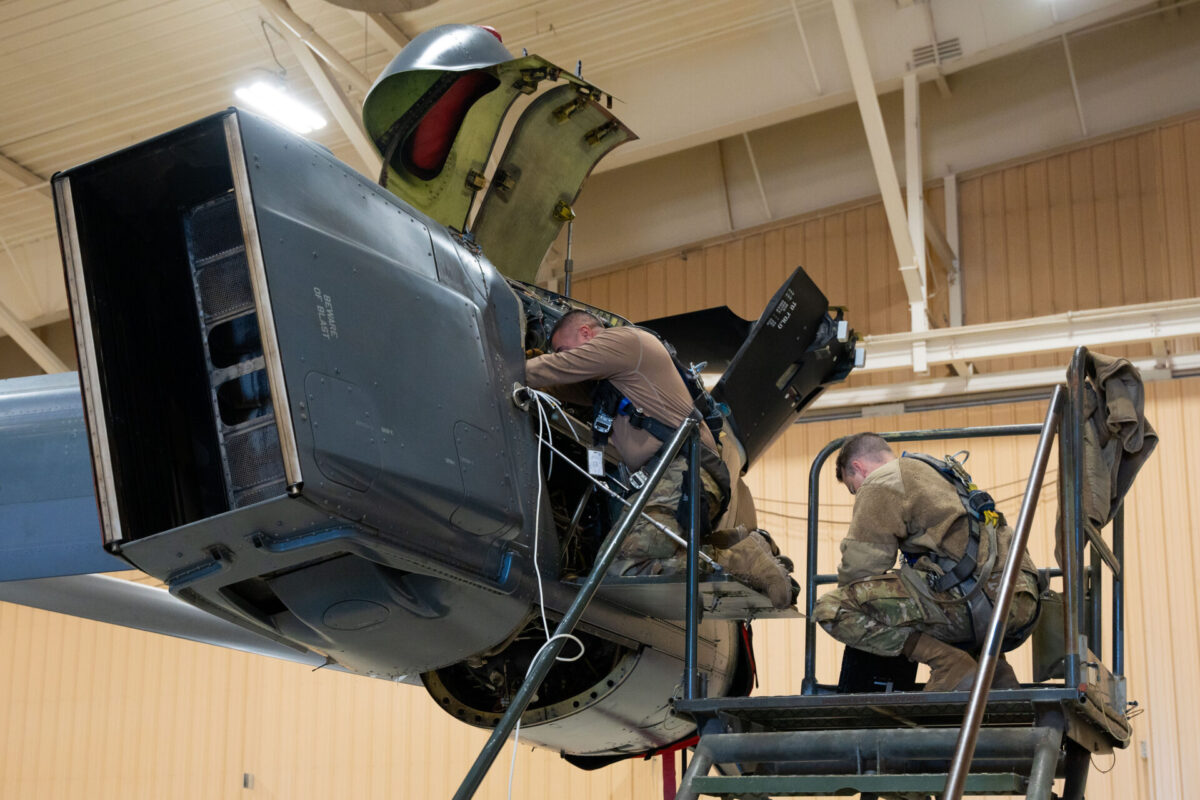
The US Congress authorized a $160 million package in the 2024 National Defense Authorization Act to extend the NI effort beyond the initial nine-aircraft contract. The US Navy and US Marine Corps intend to fold nacelle work into a broader V-22 midlife upgrade covering the drivetrain, airframe, and avionics, with a cockpit technology replacement initiative also in scope. The JPO indicated in February 2026 testimony that the objective is to sustain the Osprey fleet into the mid-2050s.
For AFSOC, the near-term question is whether the readiness gains Bell is advertising translate into a fleet decision on the roughly 15 CV-22s that the service has rotated into flyable storage since the early 2020s. AFSOC has previously said it expected sufficient data by late 2025 to inform that call.
source