


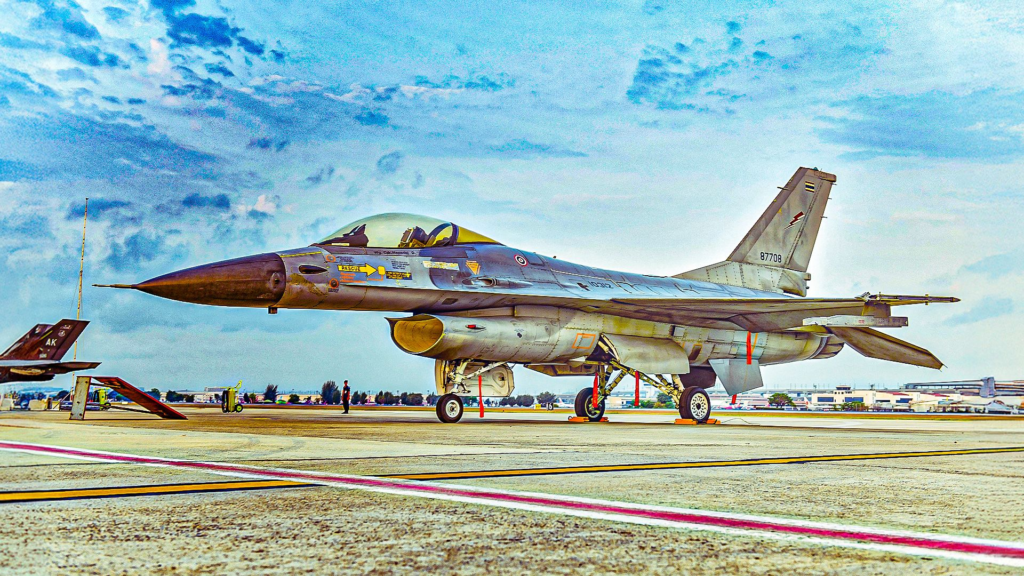
The United States of America has the largest defense industrial base in the world, and a major element of that is the aerospace industry, which produces the finest combat aircraft anywhere on the planet. To support America’s allies around the world, a very large number of fighter jets are exported to partner nations that lack their own domestic industrial capacity. There are other ally nations such as Turkey, Korea, and Japan that produce aircraft domestically under license from American companies like Boeing, General Dynamics, or Lockheed Martin.
At the same time, there are still others that either cannot or do not want to establish a domestic industrial base and simply purchase warplanes through foreign military sales (FMS) contracts. We will review seven countries that have the largest numbers of jets purchased directly from the United States and not made overseas through partnerships or licensing deals. This list includes everything from legacy F-16 Fighting Falcons to the latest and greatest stealth jets and the iconic F-15 Eagle air superiority fighter. Without any further ado, let’s get the numbers and break down which air forces are the biggest fans of American wings.
Taiwan
137 Fighter jets

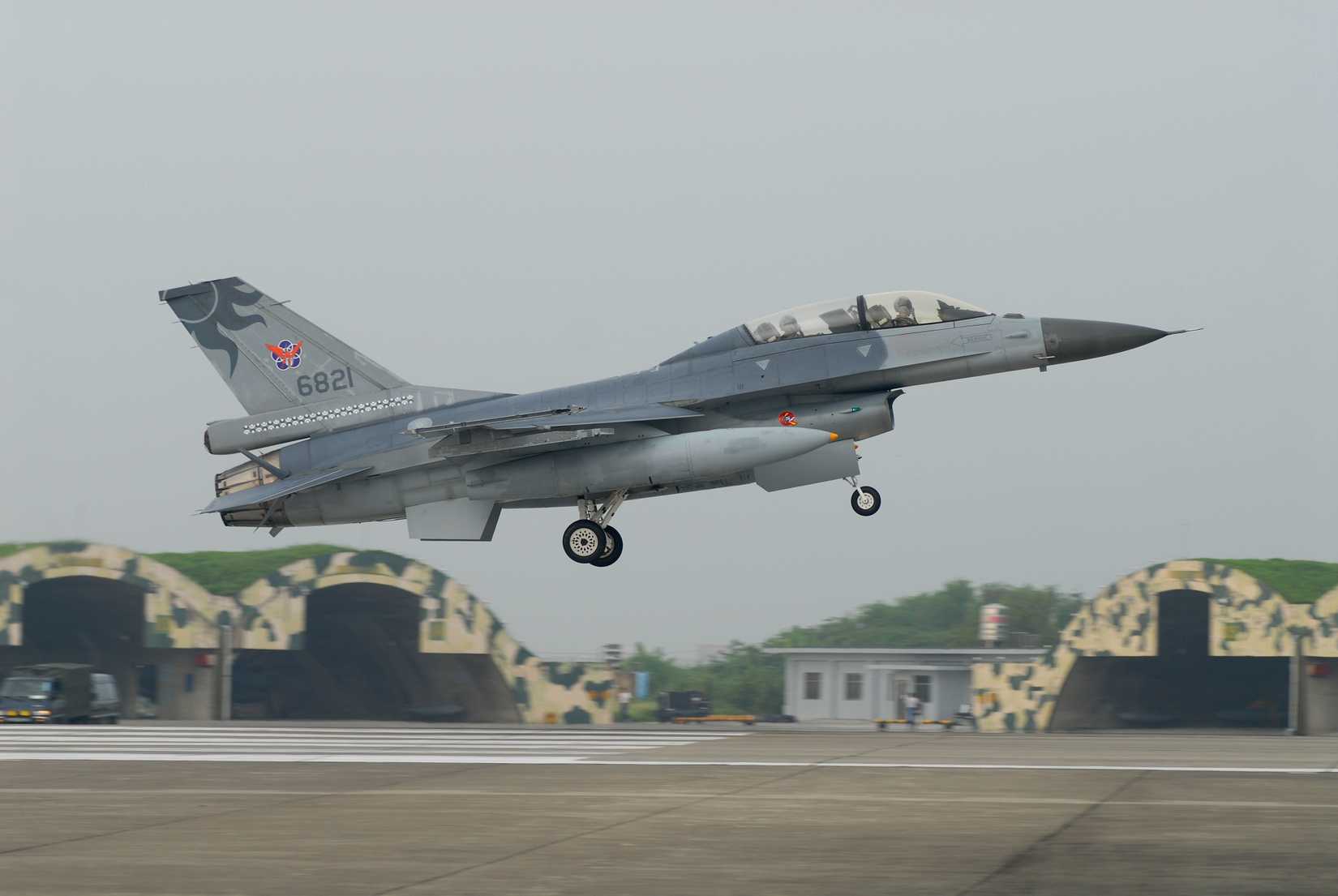
The Taiwanese Air Force relies heavily on US-sourced aircraft, with the F-16 Fighting Falcon as its primary multirole fighter jet. The United States serves as Taiwan’s main supplier for both aircraft and essential support. Taiwan has an existing fleet of F-16A/B jets that have been upgraded to the modern F-16V (Viper) standard, a program completed in 2023. An additional 66 newly built F-16V Block 70 jets are currently on order, with deliveries expected to be completed by the end of 2026.
An aging fleet of Northrop F-5 Tiger II, first received via the US Military Assistance Program in 1965, is still in service, though its role has largely shifted to training and second-line duties. The ROCAF regularly scrambles its jets to intercept People’s Liberation Army Air Force (PLAAF) aircraft, which has put a significant strain on its fleet and budget.
Greece
148 Fighter Jets


The Greek Air Force is a major NATO air power. It operates a diverse fleet but is also heavily reliant on American aircraft. The fleet primarily relies on the F-16 Fighting Falcon. The Hellenic Air Force (HAF) is slated to acquire the F-35 stealth fighter in the future, which will keep the United States as a critical supplier for both current airframes and future platforms.
The backbone of the HAF’s fighter fleet is the American-made F-16. Greece operates numerous variants, including F-16C/D Block 30, 50, 52+, and 52+ Advanced. Many of the F-16s are currently undergoing a substantial upgrade program to the advanced F-16V (Viper) standard, which enhances their capabilities with a new radar and other systems.
The HAF is also one of the last operators of the McDonnell Douglas F-4E Phantom II designated “Peace Icarus 2000” after a modernization program. The upcoming F-35 will allow the last Phantoms to retire. Greece officially signed a deal in July 2024 to acquire at least 20 F-35A stealth fighter jets, with an option for 20 more


How Many Military Jets Does The United States Produce Annually?
The United States produced around 150 fighter jets in 2024 and is expected to produce up to 250 in 2025, as well as other specialized jet aircraft.
United Kingdom
150 Fighter Jets

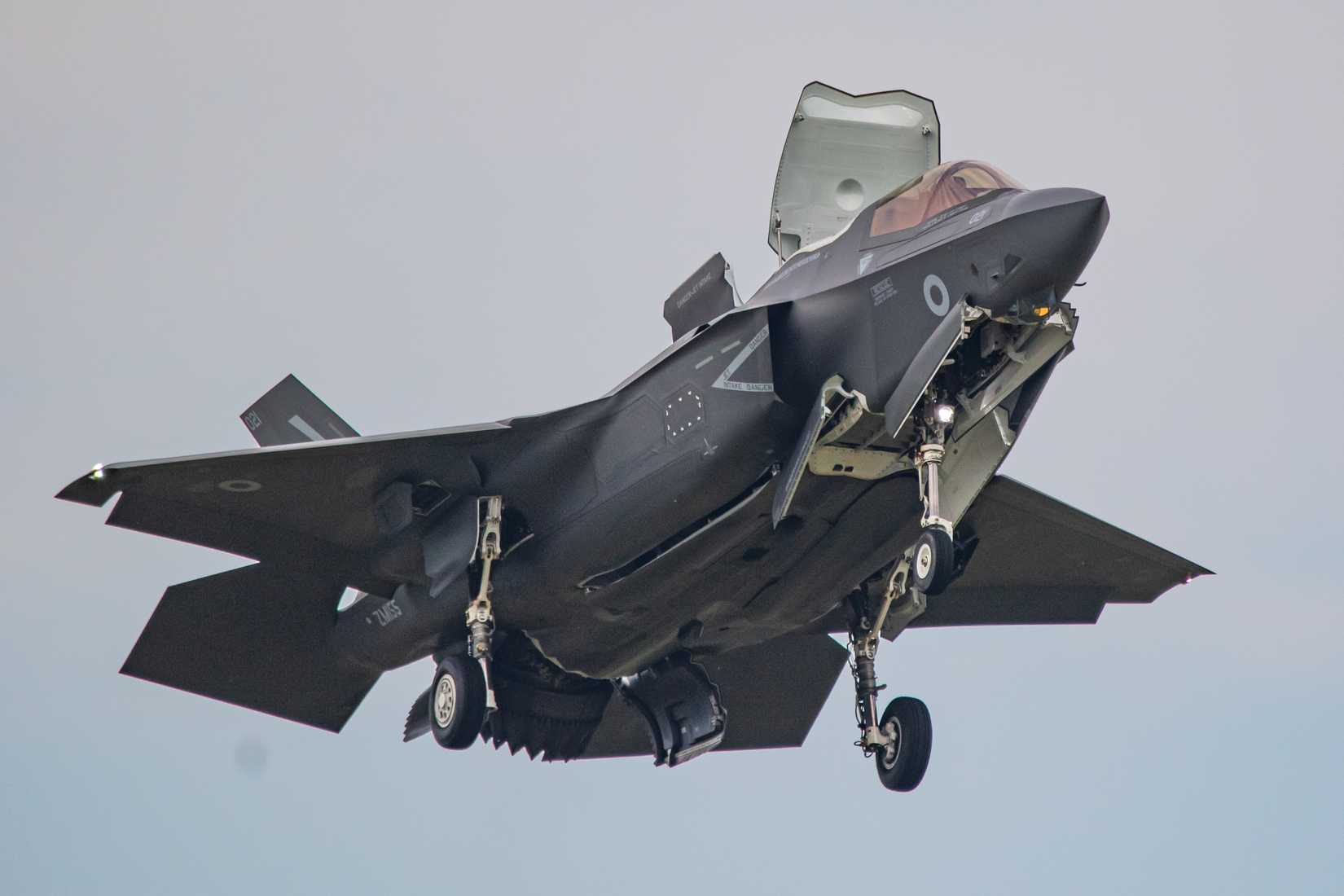
The UK has significant future plans to expand its American-sourced combat aircraft. As of now, the Royal Air Force (RAF) does not have the full number, because most of the 12 F-35As and 138 F-35Bs are still on order. Once all of the Lockheed Martin F-35 Lightning II stealth fighters are delivered, they will have a large fleet of fifth-generation Joint Strike Fighters (JSF), as the F-35 is also known.
The F-35B variant has Short Take-Off and Vertical Landing (STOVL) capability, allowing it to operate from the Royal Navy’s Queen Elizabeth-class aircraft carriers as well as land bases. New F-35A variants are specifically intended to be dual-capable aircraft (DCA), meaning they can carry both conventional and B61 series tactical nuclear bombs.
The RAF has also identified a need for a new advanced fast-jet trainer to replace its aging BAE Systems Hawk fleet. Saab has proposed a UK-assembled version of the joint Saab and Boeing-made T-7A Red Hawk as the solution for this program.
Alongside its American aircraft acquisitions, the RAF is also developing the indigenous, sixth-generation “Tempest” fighter jet as part of the Global Combat Air Programme (GCAP), a collaboration with Italy and Japan, which is expected to enter service around 2035.

Which Country Has The Most Superior Military Jets In The World?
Discover why the US leads global air power with over 13,000 aircraft, cutting-edge fighters like the F-35, and sixth-gen tech like NGAD and B-21.
South Korea
204 Fighter Jets


Technically, the Republic of Korea Air Force (ROKAF) has just under 300 fighter jets of American design origin. Of that number, around 90 were made in South Korea using components shipped from the United States. American-made fighter jets are forming the critical mass of their combat air power with key fighters including the F-16, F-35, and F-4.
The F-15K Slam Eagle is a specialized strike variant of the 

South Korea operates the fifth-generation F-35A stealth fighter. The delivery of these advanced fifth-generation aircraft significantly enhanced the ROKAF’s capabilities. An aging but still operational fleet of F-4 Phantoms remains in service, but these aircraft are gradually being phased out as newer F-35s arrive.
Egypt
218 Fighter Jets

The Egyptian Air Force operates a diverse fleet from various sources, including France and Russia, but the majority as American-made fighter jets in its combat air wing. The F-16 is the mainstay and numerical backbone of the Egyptian AF, with over 200 aircraft in service. Egypt was a close Soviet ally in the 1950s and 60s before shifting its alignment to the US after the 1970s. This history means it still operates some older, legacy Russian equipment for which it needs spare parts and maintenance, alongside newer Western systems.
The F-16s were acquired under various “Peace Vector” programs and include A/B, C/D, and more advanced Block 52 variants. The F-16s handle the bulk of the air-to-air and ground-attack missions. Egypt has a fleet of F-4E Phantom II jets in reserve as well, which were succeeded by the Fighting Falcon. While Egypt has expressed interest in acquiring more advanced U.S. aircraft like the F-35 or the latest F-15EX variants, these sales have not been finalized due to geopolitical considerations. US policies continue to take measures that ensure Israel’s “Qualitative Military Edge” (QME) in the region, which precludes sales of 4th-Gen-Plus or 5th-Gen fighters to Egypt.

Pentagon Raises Concerns About US Selling F-35 Fighter Jets To Saudi Arabia
Will American stealth tech be leaked by Trump’s deal?
Saudi Arabia
269 Fighter Jets


The Royal Saudi Air Force (RSAF) is a major US arms customer, relying heavily on American-made equipment, with the F-15 fighter jet as its core combat aircraft. Saudi Arabia has requested and received preliminary US approval to acquire at least two squadrons (48 planes) of F-35A stealth fighter jets. The RSAF also previously operated a fleet of F-5 light fighters, which have largely been replaced by more modern aircraft and are now out of service.
The F-15SA (Saudi Advanced) is a highly advanced, customized variant of the F-15E Strike Eagle, featuring a modern active electronically scanned array (AESA) radar, digital electronic warfare systems, and fly-by-wire controls. Boeing has offered the advanced F-15EX Eagle II to Saudi Arabia. The RSAF reportedly plans to acquire as many as 60 of these jets to complement or replace its aging Tornado IDS fleet.
Granting the purchase of the F-35A would be a major policy shift for the US and the Middle East, especially given the Kingdom’s ties to China, which is a major security concern. If the sales were approved, that would open up a very risky opportunity for China to gain access to the technology inside the F-35 through espionage or other clandestine means. Saudi Arabia acquired dozens of liquid-fueled, intermediate-range ballistic missiles from China in the late 1980s. In 2007, with US support, Saudi Arabia purchased more accurate, solid-fueled DF-21 medium-range ballistic missiles from China.
US intelligence and satellite imagery confirmed in late 2021 that Saudi Arabia was actively producing ballistic missiles at a facility near Dawadmi with Chinese help, as CNN reported. Access to F-35 data could provide intelligence for China, allowing them to significantly accelerate the development and refinement of their own J-20 and J-35 fighters as well as anti-stealth capabilities by five to ten years. Saudi Arabia’s defense pact with Pakistan, a nation deeply embedded in China’s military ecosystem, adds another potential avenue for data leaks.

A Deep Dive Into The History Of Israel Aerospace Industries (IAI)
Israeli Aerospace Industries (IAI) is a globally recognized leader in aerospace and defense, renowned for its cutting-edge technologies and innovative
Israel
323 Fighter Jets


The Israeli Air Force (IAF) relies exclusively on US-built fighter jets. The IAF integrates its different American platforms with Israeli-developed avionics and weaponry, creating a highly effective force with an impressive combat record of victory against overwhelming odds and pulling off daring air raids under fire. The Lockheed Martin F-35I Adir is the most advanced jet in the fleet and serves as a primary “force multiplier.” In the recent strikes on Iran in October 2024 and June 2025, F-35s spearheaded the attacks.
The jets evaded and dismantled Iran’s sophisticated Russian-made S-300 air defense systems as they penetrated deep into Iranian airspace. The F-35s cleared a path for other aircraft and returned without any losses. The operation involved a round-trip of nearly 4,000 kilometers for some aircraft. The IAF hit over 100 targets across Iran, including missile production sites and the Natanz nuclear facility, and even destroyed some prized Northrop Grumman F-14A Tomcats of the Iranian Air Force.
Lockheed Martin F-16 Sufa and Barak variants are the classic workhorse of the IAF fleet. The F-16I Sufa is a highly modified, extended-range variant. These jets have a long and decorated combat history, famously used in the 1981 “Operation Opera” strike on the Iraqi Osirak nuclear reactor. The Boeing F-15 Ra’am and Baz variants provide the IAF with heavy air superiority and long-range strike capabilities. The F-15I Ra’am is a specialized strike variant that has been critical in missions requiring deep penetration and the destruction of hardened targets. These aircraft worked in tandem with the F-16Is and F-35I Adirs during the 2025 strikes on Iran.
source