


In October 2025, 

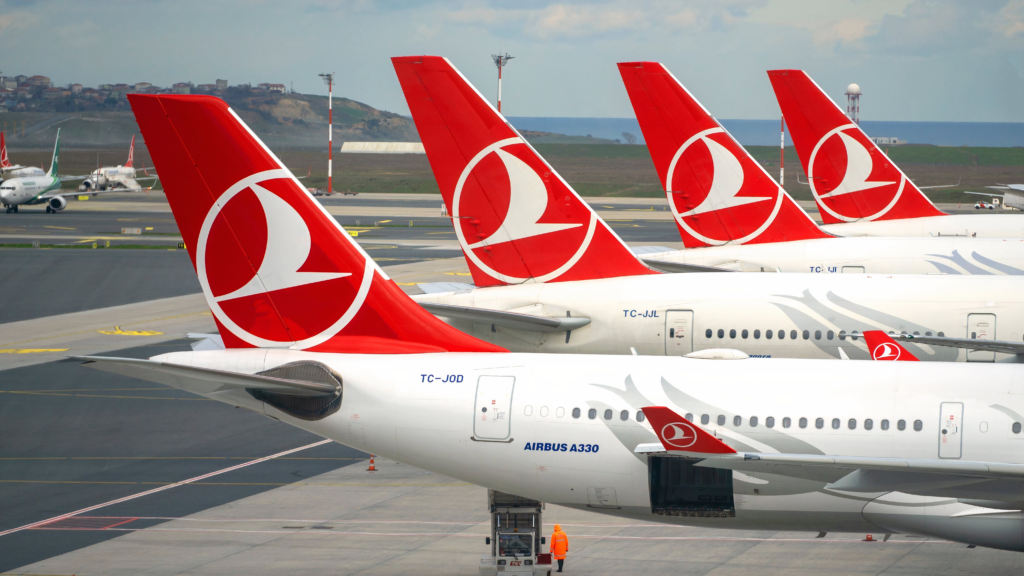
Turkish Airlines holds the world record for the most destinations served worldwide, and exemplifies how a carrier can combine local dominance with global reach. While its long-haul routes attract international travelers, the airline’s highest flight frequencies remain concentrated on short-haul sectors, particularly those linking Istanbul with major Turkish cities and nearby international markets. This mix of dense domestic flying and long-haul connectivity highlights its ‘bridge between continents’ strategy.
Top Routes


The table below details the top 10 busiest Turkish Airlines city pairs in October 2025 (both directions combined). The figures are derived from Cirium’s schedule data and aircraft type data from FlightAware.
|
Rank |
City Pair |
Approx. Monthly Flights (Both Directions) |
Typical Aircraft Used |
Avg. Flight Duration (One Way) |
Notes / Role in Network |
|---|---|---|---|---|---|
|
1 |
Istanbul (IST) – Antalya (AYT) |
1,020 |
Airbus A320/A321, Boeing 737-900, Boeing 777-300ER, Boeing 787 |
1h 10m |
Core leisure & connection route; up to 30 flights/day at peak weekends, with widebodies sometimes used during peak season. |
|
2 |
Istanbul (IST) – Ankara (ESB) |
972 |
Airbus A320/A321, Boeing 737-800, Boeing 777-300ER (occasionally) |
1h 05m |
High-frequency government & business corridor |
|
3 |
Istanbul (IST) – Izmir (ADB) |
886 |
Boeing 737-800, Airbus A320/A321, Boeing 777-300ER (occasionally) |
1h 10m |
Major domestic trunk; heavy commuter and tourist traffic. |
|
4 |
Istanbul (IST) – Çukurova (COV) |
654 |
Airbus A320/A321, Boeing 737-800 |
1h 25m |
Rapidly rising new southern hub; replaces the old Adana Şakirpaşa Airport. |
|
5 |
Antalya (AYT) – Moscow Vnukovo (VKO) |
572 |
Airbus A321 |
3h 40m |
Seasonal tourism powerhouse; strong Russian leisure demand. |
|
6 |
Istanbul (IST) – Gaziantep (GZT) |
518 |
Boeing 737-800/900, Airbus A319 |
1h 40m |
Vital domestic route linking the industrial southeast region. |
|
7 |
Istanbul (IST) – Kayseri (ASR) |
517 |
Boeing 737-800/900, Airbus A321 |
1h 15m |
Connects central Anatolia, the closest airport to the Cappadocia tourist hotspot |
|
8 |
Istanbul (IST) – Ercan (ECN) |
506 |
Boeing 737-800, Airbus A320/A321 |
1h 25m |
Northern Cyprus connection: key regional service with strong demand. |
|
9 |
Istanbul (IST) – Dalaman (DLM) |
476 |
Boeing 737-800/900, Airbus A320/A321 |
1h 10m |
Strong leisure traffic; also attracts European inbound tourism. |
|
10 |
Istanbul (IST) – Bodrum (BJV) |
416 |
Boeing 737-800/900, Airbus A320/A321 |
1h 05m |
Coastal resort market; year-round frequency sustained by tourism. |
Together, these routes accounted for nearly 6,500 flights last month, underlining how Turkish Airlines relies on its domestic and near-regional network to sustain passenger flows. Notably, the first four routes are all domestic, emphasizing Turkey‘s vast internal air demand.
“One of our goals is to connect every corner of Turkey with the world through Istanbul,” a Turkish Airlines spokesperson told Simple Flying during a press conference in Stockholm earlier this month. Turkey is home to 22 UNESCO World Heritage Sites, most of which can be reached via Turkish Airlines’ extensive network.
Fleet & Operational Strategy


Turkish Airlines operates one of the most diverse short-haul fleets in Europe, centered on the Airbus A320 family, including neo variants, as well as Boeing 737-800/900, and MAX models. These types dominate high-frequency domestic and regional routes, as well as short-haul international routes, offering capacity for 150 to 200 passengers. Their efficiency and quick turnaround times make them ideal for dense daily operations such as Istanbul–Antalya or Istanbul–Ankara.
The airline’s widebody aircraft, including the Airbus A330-300, Airbus A350-900, Boeing 777-300ER, and Boeing 787-9 Dreamliner, are typically deployed on longer international sectors. However, they occasionally appear on high-demand domestic routes during holidays to balance capacity. By maintaining extensive narrow-body operations across Turkey, Turkish Airlines maximizes feed into its Istanbul hub, which then connects passengers onward to Asia, Africa, Europe, and the Americas.
This structure mirrors that of 


New Destinations & Network Growth

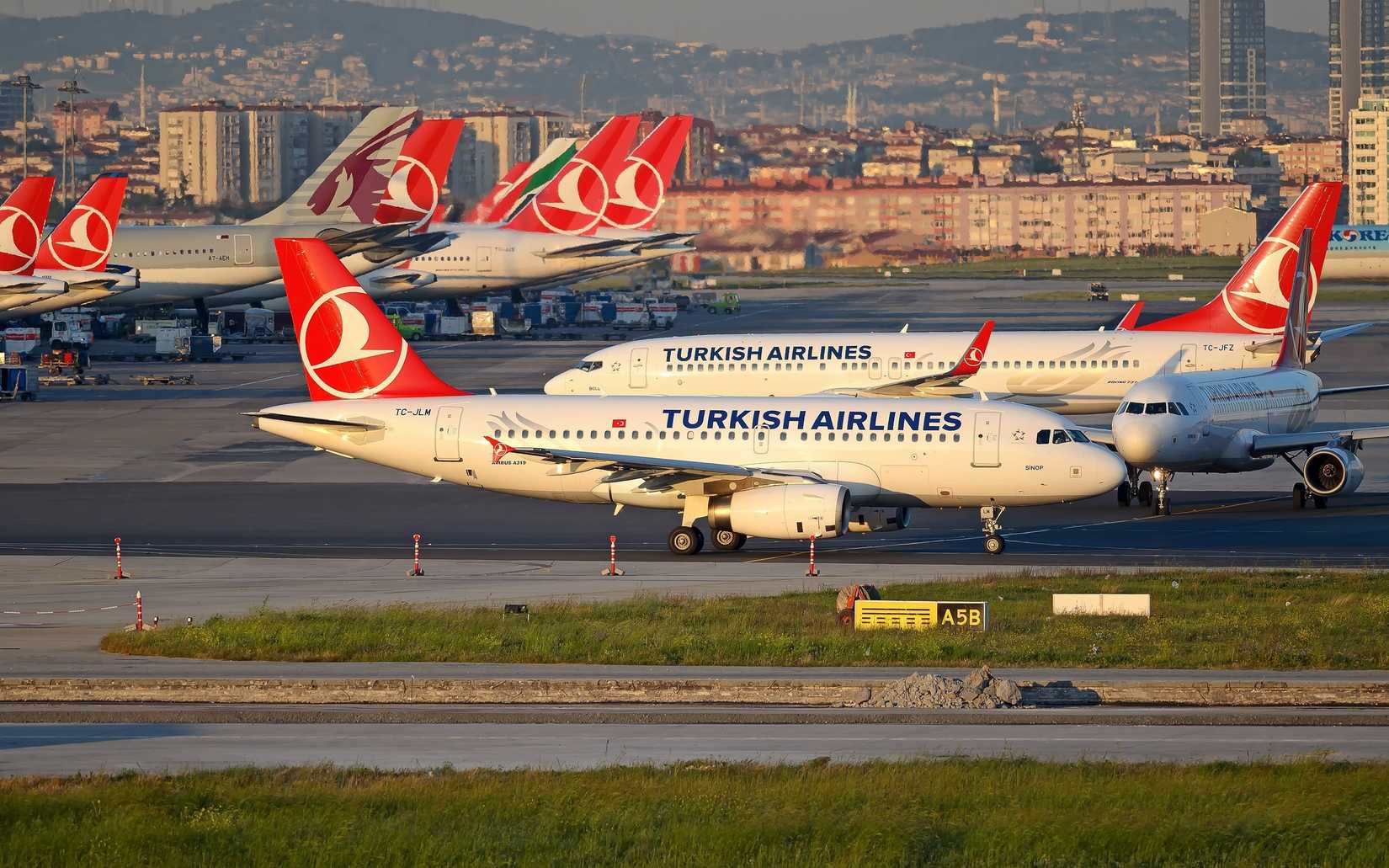
Beyond its core domestic strength, Turkish Airlines continues to broaden its global footprint. Recently, the airline confirmed the resumption of flights to Aleppo and Damascus, Syria, its first scheduled service to the war-torn country in over a decade. Additionally, it announced new flights to Phnom Penh (Cambodia), set to launch later this year, marking its first entry into that market.
Since 2023, Turkish Airlines has restored or inaugurated flights to Detroit, Denver, Osaka, Palermo, Melbourne, Sidney, and others, alongside increasing frequencies to Africa and the Middle East. The rapid rise of Çukurova Airport (COV), now among the top four busiest domestic routes, demonstrates how new regional infrastructure quickly integrates into the airline’s network strategy.
As of October 2025, Turkish Airlines’ operation combines massive domestic scale, an evolving fleet mix, and continuous global expansion. With more than 37,000 monthly flights, led by high-frequency domestic operations using 737s and A321s, and upcoming launches in new international markets, the carrier’s momentum shows no signs of slowing.
source